THE VR GRID

PSVR PSVR‘ alt=’PSVR’ id=’templ_icon_36′ width=’40’ height=’40’ /> Hub Category: PSVR PSVR

  • Wanderer

    Wanderer

    Developer / Publisher – M-Theory, Oddboy
    Price – US $39.99 / CAN $45.99 / EU €39.99 / UK £33.99 / AU $54.95
    Release Date – January 27th, 2022
    Input – 2 x Tracked Motion Controllers
    Play Area –  Seated, Standing
    Store – PlayStation, Steam, Oculus
    Reviewed on –Oculus Quest 2 w/ Link

    It’s funny, I was going to start this review off by stating that VR is lacking in those larger AAA(esque) titles thanks in large part to the focus on Quest titles, but that’s not true as in the last year we had some amazing offerings like Sniper Elite, Lone Echo 2, Winds & Leaves and many more.  With that said, we haven’t seen to many games in recent years that reach the presentation levels of Lone Echo or HL: Alyx so it’s a little special when a game aims for those lofty heights and now we have Wanderer, a time traveling puzzler packed with interesting gameplay mechanics and a crazy narrative.

    The future isn’t looking so hot so it’s up to you to change the past!

    First person puzzling is the name of the game here with you playing as Asher, a young man who stumbles a across a video left by his grandfather that explains that your current reality is in fact, wrong, and thanks to some crazy tech left behind by your recently deceased ancestor, specifically an intelligent watch named Samuel, you can help unravel the events surrounding the worlds current plight.  With Samuel you can store items found throughout the game by simply placing them on his face, whereupon he will shrink it down to an easily portable size which can be summoned by tapping on his face.  Not only is he an amazing backpack, but he can also speak, helping guide you should be stuck and in a few situations, physically aid you as well.  Comfort options are available, allowing for smooth locomotion or click-turning and teleportation, with blinders which is awesome though the game doesn’t have a height adjustment option and wants you to play standing, which is fine except that I felt too tall even after calibration and restarting the game, with sitting having me too short, meaning that for the entirety of my play, I was never immersed the way I should have been.  Regardless, you’ll have to pay attention to your surroundings, and Samuel, as anything around you could be needed for a puzzle at some point in time during the 8-hour(ish) campaign.  Not only will you have to use tools, equipment and items, but you’ll find special items that, when placed into your watch, will transport you to a different location in time.  You see, someone is messing with the timeline and it’s up too you to set things right.  What’s great is that the puzzles in here almost never repeat making for a campaign that kept me on my toes but unlike other VR puzzle games the “The Room: A Dark Matter or “Xing: The Land Beyond”  the puzzles in here are almost secondary to the narrative and while that’s the not actually the case, they fit so well with the story that I often forgot I was solving puzzles so much as just finding solutions to the problems around me.  As you unlock new time settings, new items become available and items that previously had no use become needed, making for a gameplay mechanic that requires you to pay attention.

    Meet Samuel, the handiest watch ever created!

    Initially, you can only store one item in your watch, which is nothing short of lame though time shards hidden throughout the game allow you to upgrade your storage capacity and while this progression system is nice in theory, in practice in can be extremely tedious.  Quite often, you’ll have to hop back and forth through time zones to grab items you couldn’t carry on your previous return to your apartment hub and even when you max out the watch with 5 storage slots, it’s sometimes still not enough.  The easiest solution is to turn your apartment into a storage space for all the “stuff” that seems important, but the apartment isn’t exactly spacious and soon enough I had clutter everywhere and was digging though piles of stuff, trying to remember where I left that drill or bow though it’s a way better system than leaving items in their respective time zones as, in my case, I only had to search my apartment for that needed “thing” and not hop through time wondering where I saw it last.  Additionally, you can cosmetically change the look of your watch by collecting “random” items in the environment and placing them in a resonation machine, adding a nice little ongoing sidequest to further extend the game.

    The time travel effect never gets old!

    Wanderer is an undeniably beautiful game with the opening moments of the story having you navigating the flooded streets of Boston via a very ramshackle boat.  The attention to detail is extremely high with ruined buildings covered it overgrowth and once off the water, your apartment building and the various time settings you visit are rife with tons of items, many of which you can interact with and while there is a decent physics engine at play, it’s not Boneworks level, though is nonetheless impressive when you consider the scale of the game.  You’ll visit a variety of environments ranging from an ancient Mayan temple, alternate moon landing, (not-quite) Woodstock, World War 2 and few more settings with some time bending twists that make them all a treat to visit.  As this is a sci-fit tale, you’ll find yourself in some crazy situations and I’d be remiss if I didn’t mention the time travel mechanic, which looks like a Hollywood effect as your watch sucks in the special items that allow you to traverse reality.   I never got sick of watching it suck in Mayan statues, a bullet, pin wheel and host more random items that help show off where they will take you and to travel back to your apartment, simply press a button on the bottom of the watch and pull that item out it.  As great as it can look, it’s not perfect with most of the lighting being static, making things look a little unnatural at times though by no means is that ever game breaking. What is more miss than hit is the character models which can look alright at best and come off as just weird looking at worst.  Some of this can be attributed to lack of dynamic lighting though most is just by design and while all are not created equal, when they look off, they do take away from the game.  I feel obligated to mention these shortcomings, though in no way is this bad looking game and is arguably one of the best-looking games we have seen in recent memory and considering this was made by a relatively small team, it deserves to be mentioned with those other “best looking VR titles.

    Whatever minor shortcomings may be in the visual department, there are none on the audio side things with some fantastic 3D audio accentuating every aspect of the story.  Samuel talks to you with a southern drawl, and I couldn’t help but think he should be played by Matthew Mcconaughey if they ever adapted this to the big or small screen.  The soundtrack is nothing short of epic with music popping in when it’s needed to amplify the mood of a particular scene.  As you navigate through time, you’ll be treated to a host of sound bytes and conversations with people from that era with the acting being, for the most part, on point and as the story in here is a lengthy one, there is plenty of dialogue to chew through.

    The variety of the puzzles in Wanderer is impressive!

    Wanderer is a game much more in line with we have come to expect from the flat side of gaming offering up near AAA quality and I need to emphasize the word near as while it is a marvel, its missteps are made more noticeable when held to higher regard.  Those presentation issues I mentioned stand out because the game looks so great but when you see something that looks off, it just stands out more because it doesn’t match the world around it.  That same presentation is not without issue as the game seemed to stutter in larger areas and while using the smooth turn option regardless of the quality of visuals I had this set to. Items would occasionally disappear, move or get stuck in geometry forcing me to quit and restart so the game might reset the items and that did work most of the time, one of the bonus items never respawned, preventing me from unlocking that watch skin.  Samuel may also not be in sync with the current puzzle you are on and might offer advice for solutions already solved or guide you to a time you don’t need to go to. Sometimes that would fix itself, but when it doesn’t and the next step is unclear, the only choice was to reset the game or try and figure it out on my own which was annoying when I needed him. The puzzle design should also be praised but a few of the brain teaser ones did hold me up and, in those situations, I was left too my own wits, causing some hold up in my play as I struggled to decipher a solution without really understanding what the puzzle was asking for in the first pace.  It sounds a little silly to complain about challenging puzzles in a puzzle game, but those few conundrums that did stop me in my tracks did hamper the fun factor a bit.  With all those minor whining’s out of the way, I really can’t stress how much of a breath of fresh air Wanderer is and considering that it’s not from a larger studio, it’s one of the most impressive VR titles I have ever played.

    You’ll find yourself in some crazy place is time…like on the moon!

    Whatever your inclination towards VR puzzlers, anyone looking for a quality VR experience should give this a look as it highlights the strengths of the medium offering up an epic campaign with fantastic presentation.  I’ve said it on more than a few occasions that we don’t see enough of these quality VR experiences, but when we do get them, ignoring them does a disservice to the medium as a whole and these types of ventures, especially from smaller studios, should be praised as they show us the true potential for games and the direction VR needs to head.

    What would I pay? At $40 US, it’s a little pricier than the average VR title and totally worth it, offering up intriguing and very satisfying campaign.

  • Puzzling Places

    Puzzling Places

    Developer / Publisher – Realities.IO Inc
    Price – US $14.99 / CA $17.99 / EU €14.99 / UK £12.99 / AU $19.95
    Release Date – September 02, 2021(Oculus)
    Control Method – 2 x Tracked Motion Controllers
    Play Area – Seated, Standing, Room Scale
    Reviewed on –Meta Quest 2
    Store Links – Oculus, PlayStation

    With all the craziness available in VR from killing zombies, soaring through the air, bowling with friends, riding roller coasters or any other immersive activity, it’s easy to forget about the more passive experiences available.  Puzzling Places is exactly that, tasking you with completing 3D jigsaw puzzles at your own pace while enjoying some melodic tunes in a relaxing setting.

    Like any puzzle, getting started is always the hardest step!

    With 17 base puzzles to choose from, you simply pick the setting you would like to build, choose the level of difficulty (25, 50, 100, 200 or 400 pieces) and begin to build.  The pieces are arrayed in the distance as if on an invisible wall and can be selected by either hand using a laser guide to highlight them.  Once selected they fly toward your hand and can be moved as you see fit.  Should that piece not be to your liking, you can simply grab it and flick the thumbstick up to place it back in the distance.  A few tools let you look at the puzzle in a new way, temporarily making pieces invisible so you can view inside more complex puzzles or let you group pieces together should you know they’ll be used in sequence later on.  Lastly would be the ability to move about by dragging yourself throughout the puzzle area, though admittedly, this feature isn’t really needed but better to be here than not I suppose.  You can quit a puzzle and at any time with your progress automatically saving with the level selection menu indicating just how much you have progressed on each puzzle.  That’s really all there is too it and it works fantastic allowing anyone to easily combine pieces and assemble the setting with the 25-piece puzzles taking only a few minutes with the 400-piece ones taking substantially longer.

    Every puzzle in here is a treat to complete!

    Puzzling Places advertises it’s puzzles as “hyper-realistic miniatures” and that description is apt as each one contains tons of finer details thanks to photogrammetry which basically take multiple 2D images and converts them to 3D.  Whether it’s a cathedral, castle ruins, city streets or space station (available in the MRDS DLC) each one contains fantastic levels of realism that had me wishing I could shrink myself down and visit them closer in VR.  What makes these puzzles a little cooler than your average 3D jigsaw is that some of the puzzles contain smaller elements that just wouldn’t be possible with standard 3D pieces.  A city street littered with crates and barrels or a seaside cliff with not just a lighthouse, but a plethora of trees or bushes or even just the inside & outside of a shack.  The variety of the puzzles, as well as the differing scale of each of them makes each one its own unique treat and regardless of the level of difficulty you play this one, each puzzle completed is a satisfying experience.  The space you play in is rather barren save for a few reeds and plants nearby though should the background palette not be to your liking; you can change it using one of the menu options above you.

    Even in the easier difficulties, there is still some fun challenge!

    Matching the puzzle building action is some light music that plays during each puzzle, but the standout is the thematic sound effects that occur when you successfully connect certain pieces together, so lean in close to a completed window or fixture and you might hear some additional effects, made even better by some great 3D audio.  Whatever you are trying to build, like the lighthouse setting, will have matching audio so while you assemble the puzzle, you’ll do so to the sounds of the tides and seagulls flying overhead adding a next level to the puzzle building experience.

    When these puzzles are completed, they look amazing!

    Puzzling Places is a relatively simple concept that is executed near flawlessly, so much so that I really can’t find anything to complain about.  The attention to detail is greater than I ever expected and the options from 25 to 400 pieces ensure anyone can hop on and have a relaxing time trying to put together these miniature set pieces.  With DLC there are only 20 puzzles to get through but considering that each one can take up to a few hours to solve, there’s plenty of content in here assuming you want to challenge yourself.  For those who think they might enjoy building 3D jigsaw puzzles in VR, I can pretty much guarantee you will, just make sure if you play this on the Quest headsets you have a full battery because on the harder difficulties, you’ll need it!

    What would I pay?  This is $15 US which puts each puzzle at roughly a dollar apiece which is an absolute steal!  With new free and paid for DLC coming soon and multiplayer planned for this year, there is so much bang for your buck here I can’t recommend this enough…assuming you like puzzles in the first place.

    Realities.IO Inc provided The VR Grid with a press code for this title and, regardless of this review, we thank them for that!

  • Baby Hands

    Baby Hands

    Developer / Publisher – Chicken Waffle
    Price(PS) – US $19.99 / CA $26.99 / EU €19.99 / UK £17.99 / AU $34.95
    Release Date – November 24th, 2021(PSN)
    Control Method – 2 x Tracked Motion Controllers
    Play Area – Seated, Standing, Room Scale
    Reviewed on –PSVR (PS5)
    Store Links – Oculus, Steam, PlayStation

    I’ve been aware of Baby Hands for some time, ever since I found out it was coming to the PlayStation VR headset.  Despite ‘mostly positive’ steam reviews, I held off on checking it out beyond watching a trailer as it honestly didn’t hold much appeal to me with its mix of sandbox baby ‘sim’ gameplay that echoed back to the earlier days of VR.  With the PlayStation VR release I finally dove in to see what the fuss was (sort of) about so let’s get too it.

    It’s a big world outside of the pen.

    With your 2 baby hands, you’ll have to escape the confines of your pen but in order to move around you’ll have to crawl by moving one hand in front of the other and dragging yourself about the house where your seemingly terrible parents have left you alone and to your own devices.  With the house at your disposal, it’s up to you to do, well, anything you can come up with as you can grab almost anything you can reach and bring it anywhere in the house.  You also have the option of standing up which helps in reaching those taller spots with many areas like chairs and desks being scalable thanks to nearby arrows that teleport you to that higher level allowing for more exploration.  During the opening minutes of the game, your tasks are obvious with a nearby bow & arrow offering up some target practice, a gaming system with nearby cartridges ready for play or a remote-control car with an obstacle course to drive through.  The obvious interactions are easily the most uninspired offering up gameplay mechanics we have seen countless times in other game with easter eggs to be found throughout the house adding to your task list.  Once the obvious stuff was out of the way though, the games intricacies started to reveal themselves with some more complex and clever puzzles that require some significant thought, and maybe even some knowledge of pop culture from the last few decades, to piece together with some tasks being unavailable until others have been completed.

    Mess around however you want!

    Baby Hands visual presentation is nothing special with the house offering simple, cartoonish visuals with lacking textures that fall in line with PS1/N64 era visuals, just with increased pixel counts.  Where Baby Hands lacks in visual quality, it makes up for with its charm, thanks to the large number of items you can find and just what those items are.  Stock children’s toys are scattered around the house like building blocks and toy vehicles, but it’s in the pop-culture references where the game really shines.  From a DeLorean that can be used to enhance a racetrack, a literal alien ant farm, a rather aggressive piranha plant and some more subtle references to movies, shows and games from yesteryear and every time I stumbled across one of these pop culture nods, I couldn’t help but smirk.  Whenever I started a game, the house resets, which was initially a little annoying as I did enjoy my carnage but allows for an easier time completing puzzles (as indicated by the trophy list), especially when I had misplaced or moved an item needed for my next task.  It’s not going to win any ‘best looking games in VR’ lists but what’s here gets the job done.

    Sound design is a little erratic with sound effects that are all over the map when it comes to volume levels, though all the effects are on point.  Some very subtle, almost babyish music plays in the background with the emphasis on sound effects being at the forefront of the audio presentation.  When you trigger a mini game, you’ll be treated to some additional tunes as well as 1 or 2 items found in the house providing some additional music making for an audio presentation that matches the visuals.

    Each room has plenty of items to mess around with.

    Baby Hands actually impressed me after my first half hour in the game as I slowly began to discover more and more things to do.  That 1st half hour was fairly dull as I just performed the obvious tasks placed before me, but once I started to dig a little deeper and chase those trophies, I had a little more appreciation for the game.  Despite the fun I did have, playing on the PSVR was tough thanks in large to the Move controllers which worked perfectly fine when moving around the environment, but when controlling specific toys like the race car or any mini games that NEED a thumbstick, using the face buttons instead was just cumbersome and awkward.  I’m sure anyone who spends the time to master those controls will, but that doesn’t change the fact they are more difficult than they should be on the Sony headset.  Another, ridiculous issue in 2021, is the lack of a smooth turn option making this game not only look dated but feel dated as well with the absence of any comfort options to speak of should people want them or not.  The crawling locomotion system should alleviate sim sickness, if any, you might experience, but the lack of basic comfort options is still odd.  Even though I did enjoy finding new things to do and slowly unlocking trophy after trophy, this is still a sandbox experience which means the fun factor here relies largely upon just messing around as there is no story or even an objective list save for the PSN trophy list, which oftentimes gives away solutions which can make for a dull experience as I felt like I was just going through the motions.  Not every trophy is like that with more than a few stumping me and even after close to 3 hours of play, there are still a bunch I haven’t figured out yet meaning those that love these freeform type games should find lots to do here, but if you enjoy games with a little more structure than this won’t be for you.

    Do what you want! Your horrible parents deserve it!

    I was surprised by how much I enjoyed playing Baby Hands though I do need to stress that I went in with fairly low expectations.  On that same token, while I did have fun for a few hours, I became bored with the game before I completed all of my tasks with little drive to return. It delivers on it’s promise of playing as a baby in a sandbox house that is loaded with funny interactions and puzzles to solve.  If you enjoy more casual experiences like Job Simulator or Hotel R n R than you’ll probably dig this but if just messing around in VR doesn’t do it for you, this probably won’t either.

    What would I pay? Baby hands retails for $20 US and while that price is justified by the content value, the sandbox nature of the game as well as the overall middling quality of it all has me thinking of this landing somewhere in the $10 range.  It’s charming and has a few funny moments, but that’s not enough to make this feel like anything but a budget VR title.

    Chicken Waffle provided The VR GRid with a press code for this title and, regardless of this review, we thank them for that!

  • Windlands 2

    Windlands 2

    Developer / Publisher – Psytec Games
    Price(PS) – US $29.99 / CA $34.99 / EU €29.99 / UK £24.99 / AU $42.95
    Release Date – November 15th, 2018(Steam)
    Control Method – 2 x Tracked Motion Controllers
    Play Area – Seated, Standing, Room Scale
    Reviewed on –Oculus Rift, PSVR (PS5)
    Store Links – Oculus, Steam, PlayStation

    This review has been updated on Nov 26, 2021 to reflect the release of the PlayStation VR version.

    Windlands was released shortly after the launch of the Rift and Vive headsets all the way back in 2016 and arrived on the PlayStation VR as a launch title,  establishing itself as one of the go-to VR games thanks in large part to its unique grappling mechanics that had you cruising through the air at crazy speeds.  Windlands 2 is a direct follow-up to that game, though you don’t need to play the first to enjoy this sequel, which includes the same navigation mechanics and introduces a more in-depth campaign and some combat to spice things up.

    Swing away!

    Motion/Move controllers are supported as well as the DS4 controllers for the PSVR with this as this playing  by-and-large like a mixture of Bionic Commando and Spiderman with both of your hands being armed with grapple guns.  You can only latch on to certain types of surfaces (typically green) and when those are in range of your guns, your reticles indicate where you will fire and turn blue.  Like its predecessor, the controls here are intentionally floaty and based largely around momentum and as you grapple onto a surface, you are immediately propelled toward it.  The key to quickly traversing the stages is to chain together grapples, constantly moving up or down always looking for that next piece of terrain you can grab or safe spot you can land on to reassess you next move.  You can also spawn an energy bow and arrow needed for the combat and occasional target practice sections.  This mechanic works great (on PC) and when you draw your arrow back a small dot appears indicating the path of the bolt.  PSVR users will struggle balancing this mechanic as forward and backward movement is handled by the Move and square buttons with turning handled by X & O on the off controller.  The direction of your movement is mapped to either a controller or direction you are facing making for a slightly less than ideal mix of movement and combat that can be tough to balance during the harder encounters.  Spawning the bow while aiming, swinging or moving and turning just becomes incredibly cumbersome on the PSVR and while I did get used to it, it never felt comfortable compared to the PC version, especially when you factor in the less than ideal tracking for the PSVR.  Encounters really are secondary to the exploration in here with later stages challenging you to find the right path to a goal, occasionally fighting a smaller bot with each stage ending in a massive boss battle.

    Frickin’ laser beams!

    The campaign or any select level can be played in single player or multiplayer with the game getting substantially easier with others. If one of you bypasses a particularly difficult area, the rest of the players can spawn off of that person making it a little easier to get through the stages. Boss battles are much easier as the enemies have trouble focusing on multiple targets allowing for multiple players to quickly pick apart the bad guys. A few other modes are also available including speed run challenges and races with leaderboards along with a few others like ‘Hook Anything’ or ‘one life’ which offer a few different ways to play through the campaign.

    Like its predecessor, Windlands 2 utilizes a very simple cell-shaded look that is striking. Everything and everyone have simplistic color tones and lacking textures, making it look very cartoonish but friendly. What this allows the game to showcase though is an amazing draw distance that lets you see to the horizon. The world and stages are quite large with some requiring you to constantly climb up and up while others have you skirting the ground below, forcing you to be very careful as touching sand results in instant death and a respawn at the last checkpoint. While the world is large, it feels very empty at times as much of the levels are static and don’t feel populated by anything but yourself. Even if the visual style doesn’t appeal to your eyeballs, when you are flying and scrambling to grapple to the next objective, it’s absolutely thrilling at top speeds as you narrowly escape death by catching a point you thought was just out of reach or mad-circling bosses as they unleash all manner of attacks. The robotic enemies you face carry more detail then just about everything else in the game, especially the bosses, but given the scope and overall polish I thoroughly enjoyed the presentation.

    There is much more story then in the 1st one including fully narrated characters and a big bad you need to defeat. The voice work is a little over the top but fits the cartoonish look of the game with every character being overly exuberant and excited, but it works. The music in Windlands 2 is top quality offering both epic and emotional tunes when they fit as well as some great ambient and chill music when you are just whipping around.

    These sections are actually quite difficult.

    There really isn’t too much to complain out here with my largest issue being the feeling of repetition that kicks in during longer plays  The campaign consists entirely of fetch or kill quests tasking you with navigating around smaller sections (when compared to the larger world), looking for a specific number of collectibles or getting to a waypoint a km away to defeat an enemy.  As you progress through the campaign the stages do get more difficult with grapple points being further apart or covered in spikes forcing quick reactions lest you fall or hit those spikes and die, causing a respawn back to the last checkpoint, which are scattered all throughout the world.  These later missions can be incredibly frustrating as, at certain points, I was falling to my death over and over to the point of madness until I had that one good run that got me to the next checkpoint.  Those frustrating moments are balanced out by the satisfaction of nailing those seemingly impossible flight paths.  The checkpoint system is one the most forgiving of any game as any progress you made, whether it’s finding items, destroying enemies or removing a bosses shields 1 by 1, is saved, allowing any mission to be beaten while dying again and again.  Given the nature of the game and how easy it can be to miss a grapple point or jump, I totally understand why this system is in place, but it does remove much of the danger in any encounter as you can just respawn and slowly whittle down your foes.  Multiple difficulties are available which affect how much damage you can take and dish out with medium offering a decent amount of challenge without being to intense.  While longer sessions did feel repetitious, every time I hopped in for a quick go it was exhilarating to swing around in this incredible world.

    It’s always better with friends.

    Despite my few misgivings, Windlands 2 is still a blast to play alone or with some friends.  Covering vast distances in such a short time as you whip past floating islands all while combating a variety of robots through a fully realized campaign is a ton of fun.  If you enjoyed the first Windlands title, this is all that game was and much more offering thrills you just couldn’t experience outside of VR.  If you are in the mood for an explorative adventure, this is great!

    What would I pay? The full price of $30 is more then fair.  The campaign should take around 6 hours or so and with the multiplayer aspect and other modes available there is a fair bit of content to get through.  As I said, long plays do start to get old but tackle this in a stage by stage basis and that should help alleviate the feeling of sameiness and regardless of that feeling, soaring across the landscapes is both breathtaking and satisfying.

    Psytec Games provided codes for this title and, regardless of this review, we thank them for that!

  • Gravitational

    Gravitational

    Developer / Publisher – Electric Monkey’s / Perp Games
    Price – US $19.99 / CAN $25.99 / EU €19.99 / UK £17.99 / AU $32.95
    Release Date – November 11th, 2021
    Input – 2 x Tracked Motion Controllers
    Play Area –  Seated, Standing
    Store – PlayStation, Steam
    Reviewed on – PSVR (PS5)

    Environmental puzzlers offer up, in my mind, a more immersive way to experience clever conundrums, in or out of VR, as the puzzles in question allow you to navigate through a world and make the player feel like a part of it.  Whether it’s flying through portals, guiding paper beasts across a landscape or transposing various versions of yourself to interact with each other at the right time, being directly involved with shaping the world around you just makes a game better.  Gravitational places you in the role a Sebastian, a paraplegic scientist tasked with repairing a reactor in a space station before it explodes.

    It’s all about moving and placing cubes!

    As Sebastian lacks the use of his legs, you’ll have to move around the facility in a wheelchair which you can do by using your hands and grabbing the wheels, though I much preferred the virtual joystick which allows you to cruise around the facility with relative ease.  As the facility is in shambles, you’ll have to avoid debris and get through each floor, bypassing obstacles that aren’t so wheelchair friendly.  Each hand can spawn gravity guns (of sorts) that initially let you manipulate specific blocks in each stage that make bridges for Sebastian to move past large gaps in the floor.  These blocks behave in different ways based upon their color with all of them needing a power source for them to activate.  Blue blocks extend a power source to whichever sides are actively charged, red blocks extend out and make a 3-block bridge, green blocks can be pulled out of walls for some very lengthy sections and purple ones make a T formation and in order to get past each successively more challenging puzzle, you’ll have to manipulate the blocks provided to get to the door on the other side of the room.  On top of the blocks, you’ll have to move through zero-g sections that require you to push and pull yourself through them to platforms above or below you.  Lastly would be a late game circuit making puzzle that has you moving power to specific nodes on a large holographic circuit board.  Once you finish a puzzle, you’ll be brought back to a gravity elevator and continue to move upwards through the facility even though the reactor is apparently in the lower levels.  All of that sounds well and good and on paper, should be a solid puzzler but unfortunately, questionable gameplay choices constantly get in the way of the fun.

    Despite the name, floating in zero gravity is a secondary mechanic

    It’s clear the developers wanted to highlight just how it feels to navigate a world not designed for a wheelchair, and that’s fine as this isn’t the 1st game I’ve played that utilizes this type of locomotion and I can appreciate that desire to emulate the struggles of those with less mobile function.  Moving using the virtual joystick method is easy enough but I often found myself getting caught up on geometry or running into a little rubble forcing me to back up, readjust my position and get around said obstacle.  Not the end of the world, but there is currently no option to turn off the forced blinders when moving which was nothing short of intrusive.  If you lean to far forward, turn your head to much or if you don’t bring your body back to the standard sitting position, the game I guess assumes you fell out of your chair or something and respawns you nearby.  That is usually avoidable except when travelling in those zero-G sections where you lose the ability to turn.  It’s maddening to be able to grab handles with both hands but are unable to adjust your forward-facing position and if you reach too far out of the designated play area, are forced to reset and try again.  Said zero-G physics are also bare bones as you basically just end up pushing yourself from handle to handle to get to the other side and if you miss or toss yourself in any direction other than towards the next handle or floor, your left to float until you leave the area and respawn, oh and you can get caught up on geometry killing any momentum and forcing a manual respawn.  When it all works, it is satisfying, but when you encounter any issue, it’s nothing short of frustrating as odds are it’s the games’ fault and not the player.

    Gravitational looks decent opting for the safety of a space station that allows for the recycling of assets so from the 1st stage to the last, you definitely feel like you are in a sterile facility.  That’s not a bad thing and with the facility in ruins, wall and floor panels may be missing, shelves and boxes will be tossed around, or busted machines may be spewing sparks so while it’s all a little samey, there’s enough changeups to keep the game from feeling to stale, except for those transition areas between puzzles which are nearly identical and force you climb up them the same way 15 times.  Sebastian has a full body in his wheelchair, which I always appreciate, and animates well enough save for when messages pop-up on his arm viewer which forced me to hold my arm up in awkward ways just so I could read them with ease.  Thanks to the emergency lighting in the station, levels are often dark allowing for the lighting to stand out with red & blue hues highlighting the environment while electricity shoots around below you in those exposed sections of each stage.  It really gave me ‘Portal’ vibes though does enough to make it stand out on it’s own and I really didn’t have to many issues with the visual presentation.

    You’ll be cruising through a typically sterile science facility.

    Some light ambient sci-fi inspired music plays in the background throughout the campaign and fits wonderfully with the puzzle solving action with other environmental sound effects all getting the job done.  The story is told through interactions between Sebastian and the facilities AI program ISA, who is based upon his deceased friend so there is some forced drama there as well as some memos found throughout the facility that highlight the difficulties of another differently abled worker.  The story is honestly very forgettable which I would say is largely due to the poor voice acting and conversational timing that was honestly a struggle just to listen to, let alone retain.

    I enjoyed the block puzzles in the game, or at least I would’ve enjoyed them a lot more if I wasn’t constantly fighting the control choices.  If a block was too far to my left, I couldn’t just reach for it, or even look at it for too long, as the game would want to respawn me if I tried.  Every time I encountered a zero-g puzzle, I cringed as, if I didn’t push myself through it perfectly, I was forced to respawn and while I do understand that I am wheelchair bound and these tasks should be difficult, working around these limitations isn’t fun, which last time I checked, games should still be.  Those late game circuit problems are also horribly explained and feel tacked on compared to the environmental puzzles and while they aren’t too challenging once you know how to do them (shout out to you Bryan Paul) they basically devolve into basic math problems that also aren’t that fun.

    There are plenty of cube types that you need to work together to make your bridges

    I like the core gameplay mechanics here, but their execution leaves a lot to be desired as the game ends up being more clunky and cumbersome than it should be.  When it works it’s good fun and solving those cube bridge puzzles was rewarding.  Unfortunately, almost everything else in the game wants to hinder your efforts making for a puzzler that’s probably just not worth the effort to play.

    What would i pay?  This is $25 US which would be fine if everything worked smooth as the campaign, I think, would take anywhere from 2 to 3 hours to get through depending upon your puzzle solving skills.  Sadly, it’s anything but smooth and even if you are a puzzle junky, $10 seems better for this as this is just as much frustration as there is fun.

    Perp Games provided The VR Grid with a press code for this title and, regardless of this review, we thank them for that!

  • Wraith: The Oblivion – Afterlife

    Wraith: The Oblivion – Afterlife

    Developer / Publisher – Fast Travel Games
    Price(PS) – US $29.99 / CA $34.99 / EU €29.99 / UK £24.99 / AU $42.95
    Release Date – April 23rd, 2021
    Control Method – 2 x Tracked Motion Controllers
    Play Area – Seated, Standing
    Reviewed on – Oculus Quest 2, Quest 2 w/ link
    Store Links – Oculus, Steam, PlayStation

    This review has been updated on 10/27/2021 to reflect the PlayStation VR release and its controls.

    I’m not to familiar with ‘The World of Darkness’ franchise other than knowing some kids in high school who dabbled in the macabre tabletop and the mid-90’s vampire television show ‘Kindred: The Embraced’ which I remember being a fan of, but not much else so for all intents and purposes, Wraith is thus, my first true foray into this dark world, and a dark world it is.  You play as Ed Miller, a photographer who has met his demise in the Barclay Mansion after documenting a seance but has arisen as said wraith and must piece together the mystery of his demise while avoiding the hellish ghouls who lurk the grounds.

    Welcome (back) to the Barclay Mansion.

    Wraith plays like a suspense filled walk-a-thon with stealth elements playing a key role in your survival.  Standard FPS controls are in effect here with a plethora of comfort options available to ensure even those with the queasiest of stomachs can enjoy this suspense/horror title. PSVR users are of course relegated to button presses to move around and while it’s definitely a little more cumbersome than it’s PC counterparts, it plays perfectly fine.  As a Wraith, you have a few abilities thanks to shedding your mortal coil including a second sight of sorts which aids in finding your next objective, a dark shadow of your subconscious who gives you advice when needed though might not be all he seems, as well as a few item pickups which help you survive and flesh out the story.  Those items are found fairly early on and include a camera, flash bulb & tape recorder.  The camera is used to unlock memories indicated by floating pictures at specific spots in the mansion.  The flash is used to scare away some obstacles in your path & the recorder is needed to solve some puzzles and reveal more back story. Later in the story you gain a few more “ghostly abilities” that mix up the gameplay a bit but for the most part this is about slow and steady survival.  You aren’t the only ghoul in the house grounds, and you’ll have to avoid the wrath of the others by being very, VERY stealthy.  the smallest sound can reveal your position, so you need to crouch whenever possible as once these spirits see you, death is only seconds away.  Crouching minimizes the sounds of your movements and you can toss nearby objects that will distract those ghouls while you try and get around them.  A manual save system is setup at specific points around the house and require to physically grab at floating orbs to save.  As you unlock more memories and find items, new areas become accessible so while you will be retreading the same rooms over and over, you’ll also find other sections never visited that keep the game feeling fresh.

    Things get grim right quick!

    Whether you play on the PC,  Quest or PlayStation VR, the visual experience is largely identical save for some slightly dumbed textures on the Quest as well as less junk scattered around the mansion making for a game that looks very impressive on the quest, but a little lacklustre on the PC side of things.  The PSVR version looks to be similar to the PC version, offering a visual experience that looks the same aside from the lower resolution of that HMD.  In no way does it look like a bad game on the PC/PS side, but given the extra horsepower, I was hoping to see a bigger boost in fidelity beyond a better-looking night sky and barely noticeable texture improvements and with no graphics options to choose from, you’re left with playing it as the devs designed and that design is still fairly damn haunting.  Of course, the Barclay Mansion is massive and while wandering I couldn’t help but get some old-school Resident Evil vibes as the mansion is spooky and the tension level never lets you truly relax.  Strange growths block some of your path and will require you to shine light on them forcing them to recede and you’ll encounter a few jump scare moments when something may flash in front of you, or you’ll see something scurry away deep in shadow.  The house and grounds are the star of the show, but the ghouls that try to kill you are a close runner up.   Each one is unique, both in appearance and behavior, and come in some pretty bizarre forms from a jittery moaning woman, giant man with a serious head wound, spider creature which is nothing short of unnerving, and a few others which keep you on your toes.  When you snap pictures of memories, you may be treated to some live scenes from the past that involve other characters who died at the seance, each time revealing some clue about the past.  I was a little underwhelmed by these as the characters animate in slow-motion without moving lips and does come off as a bit “cheap” and I’m not sure if this was done as a design choice or because of the power constraints of the Quest headsets.  It’s a little nit-picky, I agree, but those scenes still get the job done and are typically brief as they only give the barest of info that you need to piece together with the overall package here delivering a very polished and clean experience no matter which headset you play on.

    Glimpses of the past reveal your untimely fate

    Whatever shortcomings the visual might have, there are none when it comes to the audio side of things as this offers up some of the most intense and immersive sound design, I have ever experienced in a headset.  Eddie has his own villainous spirit that talks to him sometimes in physical form, but other times just in your head with sound bouncing all around you as if it were all around and I was constantly looking around to see where he was talking at me from before realizing it’s just in my head.  Other ambient effects are at play with the house making the usual creaky floorboard noises and whistling windows but it’s when you need to be stealthy that every sound suddenly sound booming.  Opening and closing doors and hearing those handles click or even just moving to fast, causing an audible step could spell your doom.  You are limited to your sight and possibly your second sight ability, so if you lose sight of the ghoul searching for you, the sounds they make whether taunts, moans, footsteps or whatever may be the only sign they are close.  Unless story is progressing, the soundtrack is kept to a minimum, typically only playing during cut-scenes or when something extra intense is happening leaving you often bathed in near silence save for your footsteps which only adds to the tension.

    Don’t let the ghouls get too close!

    I enjoyed Wraith for what it is, but what it is just won’t be for everyone.  For those that have played games like Here They Lie or Paranormal Activity, this falls in line near perfectly with those titles offering what is largely a lot of walking around with some occasional scares and the overall vibe that things are only going to get worse for you.  Due to this, the game can feel plodding at times as you visit and revisit areas over and over while meandering through the story.  That didn’t bother me, but when you combine that repetition with the save and encounter system, things get a bit frustrating.  Save points are only at select locations in the mansion and while some are spaced fairly, others may be a long way from your next ghoul encounter which can take a ton of time to try and get through but if you die, you could be forced back quite far having to retrace your path to get to the point to trigger the ghoul and subsequently try and escape it.  This is where the second issue arises as the ghouls can be unrelenting in their pursuit, randomly changing directions and not giving you a chance to move for fear of death.  Distractions (like tossing an item) work MOST of the time, but on more than a few occasions, ghouls wouldn’t react to a tossed item or worse, start to check it out than 180 for no reason (that I’m aware of) causing me to get seen, caught and killed and than forced to repeat the process all over again.  Patience is key in getting through these sections, but sometimes dumb luck was also my friend and just often, my enemy.  Trial and error had me persevere through these stealthy sections, but at times it was through gritted teeth and frustration.  Beyond that though is a game design that works quite well, slowly unravelling the horrid tale surrounding the seance and when not fighting those stealth elements, is a surprisingly unnerving game that almost never lets you relax.

    Found me!

    Horror junkies should eat this up as it provides the right amount of fear and anxiety to make the few scarier moments hammer home a little harder.  The campaign should take in the neighbourhood of 6 hours to get through and overall gets plenty more right than wrong.  For those looking to get their stealth on, when it works like it should, those sections offer up some of the most intense moments you can experience in VR and the sprinkling of horror and anxiety is the icing on that cake…assuming you dig that sort of thing.

    What would I pay?  While I do have a few issues with Wraith, the complete package is a solid one and well worth the asking price.  Horror junkies will dig this and after playing, I’m definitely more interest in ‘The World of Darkness’ and hope to see more of this franchise in VR!

    Fast Travel Games provided The VR Grid with a press code for this title and, regardless of the review, we thank them for that!

  • Song in the Smoke

    Song in the Smoke

    Developer / Publisher – 17 BIT
    Price – US $29.99 / CAN $39.99 / EU €29.99 / UK £24.99 / AU $44.95
    Release Date – October 7th, 2021
    Input – 2 x Tracked Motion Controllers
    Play Area –  Sitting, Standing
    Store – PlayStation, Oculus
    Reviewed on – PS5, Quest 2, Quest 2 w/ Link

    There aren’t a lot of Survival games available in VR, especially if you break it down into individual platforms with their being less then a few on either the PSVR or Quest headsets.  Enter Song in the smoke, where you play as a caveman (or woman) and are awoken by a three-headed crow at the edge of the woods, ​and must travel through eight stages including forests, valleys, and frozen terrain.

    Your journey begins with the 3-headed raven guiding you through the world.

    You are going to need a pair of tracked motion controllers for this one as you’ll be interacting with items and the environment constantly as you struggle to not just survive but thrive in this fantasy prehistoric world.  IT should be noted that other than the actual differences between PS controllers and PC/Quest counterparts, this controls largely the same on any platform with movement being relegated to pressing the left Move button for PSVR to walk and using that hand’s direction to steer while all other controllers just use the thumbsticks.   The opening stage acts as the tutorial, teaching you the basics by giving you a few key items to get you moving and teaching you how items can interact with each other.  Your cloak can store a set number of items, a mortar and pestle can be used to grind herbs found in the environment with bones, sticks and rocks being combined to create various tools and weapons.  You’ll have to stay warm which involves crafting clothes for yourself and making fires during the nighttime to stave off not just the cold, but the beasts (and more) that lurk in the darkness.  The world is broken up into 8 different sections with each one requiring you to find 3 glowing stones that will reveal the spirit blocking the path to the next stage.  Finding the stones are a task unto itself and developing those survival skills is paramount to your success. At your campfires you can create additional crafting stations that allow you to utilize the animals you kill for more than just food as you can create various articles of clothing that protect from animals and the elements as well as a storage sack, which will allow you to access to anything stored in the sack once you have made one near a new fire pit.  Each area only allows for 3 firepits and thankfully you have map on your chest that tracks any areas of interest.  Each stage appears to be rather small, but when you include the verticality of high clifftops and underground cave systems, it can be very easy to get lost, even if you are paying attention.  Killing animals is one way to get food with the other being to scavenge for berries and mushrooms that may grown in each area.  There is gauge on your wrist or in your cloak menu that shows your body temperature, health, fatigue & hunger and when you combine all the elements I have mentioned, plus the ones I haven’t, you get a game loaded with choices as to how you want to take on this dangerous world.

    Killing the spirits of the forest is no easy task!

    No matter which platform you play this on, Song in the Smoke impresses with its lengthy draw distance and comic book(esque) art style that lends itself wonderfully to VR.  The PC version is the clear winner in the visual department with the game being populated with the most environmental assets and jacked up resolution which has the game looking very crisp.  the Quest version on the other hand suffers a lot from a blander color palette and dramatic reduction in plant life and finer details, but considering the platform, what’s here is amazing as gameplay hasn’t been sacrificed at all.  PSVR lands somewhere in the middle, offering up similar visuals to the PC version, but still doesn’t quite have all the finer texture details and suffers from the lower resolution of the headset, but the art style used circumvents the PSVR’s shortcomings and no matter which platform you choose, the game still delivers the goods!  The worlds around you are typically lush and teeming with life with flocks of birds fleeing from the safety of a bush, massive trees that mask the sky, deer like creatures and other smaller wildlife disappearing into hiding places as well as flies, babbling brooks, waterfalls, mountains, and valley’s all making this feel like a very authentic natural environment.  With day and night cycles, the lighting changes accordingly bathing the environments in amber and pink hues in the morning while dusk brings darker blues and purples and should you be left in the dark, it is just that as you are essentially blind without a nearby fire source.  Animals move with natural grace and when a predator decides you are a tasty snack, it’s best to have a weapon on hand as you’ll have to parry and block their up-close and personal attacks.  When you crouch, you go into “hunter mode” which allows you to see the signs of passing animals and for extra sneaky goodness, moving into plants provides extra levels or cover which could be the difference between life and death if you find yourself being hunted.   It’s a beautiful game with fantastic artistic design that compliments the gameplay quite nicely.

    I HAVE MADE FIRE!!!

    While relying on what you can see will be key to your survival, listening to the sounds around you could have you avoiding dire encounters or aid in the hunting of an animal.  Some light, ambient music may play in the background if you are close to a magical stone, but otherwise the game is bathed in musical silence letting the sounds of nature accompany you on your journey.  Your character will let the occasional noise, grunting in approval when he/she crafts a new item or enjoys a snack while letting out less than enthused noises when taking damage or bleeding out.  The sounds of your footsteps, the trampling of hooves on the ground, birds calling in the distance, a nearby stream, animal, or anything else nearby would make this an almost relaxing experience save for the fact that survival was always at the forefront of my thoughts and while the world looks and sounds beautiful, I never forgot about its dangers.

    Stealthy kills are the best kills!

    Song in the Smoke isn’t the most in-depth survival game which I think helps in me liking it so much but by no means is it a simple survival game falling somewhere in the middle of being casual and hardcore.   While the tutorial does explain the basics, it doesn’t explain everything, so you need to pay attention to your options and how the game mechanics work, especially when it comes to crafting.  Your firepits are your best friend so pay attention to your cloak menu as additional crafting options are available ONLY at your campsites.  Learning how each item is used is task unto itself as even placing items that can be combined, need to be lined up accurately so they can be crafted.  Melee combat is also fairly straight forward but it’s best to upgrade your weapons whenever possible as every area offers more dangers and if you don’t have a strong enough weapon, you could be in real trouble.  When at a campsite, you need to manually save your progress and are given 3 save slots to do so which is awesome, but if you do forget to save, you can only load to your last save as there is no auto-save option so save often!  Trial and error is the name of the game here and the only way to learn what to do and what not too is by trying it yourself and seeing what happens, which can be rewarding or could cost dearly.  It’s not all perfect and I ran into a few issues, like my pestle launching my herbs into the air when I grabbed it or items nearby disappearing after I saved game and sticks flying out of a fire thanks to some wonky collision detection though none of these issues broke the game, and only impacted my gameplay in very minor way.  What’s great is that every aspect of survival in here is it’s own skill and while I initially stumbled through the game relying more on luck that anything else, I soon began to get the lay of land, searching in areas I knew would yield food, building my campsites in record time and taking out animals with relative ease though by no means does the game ever really get easy as new variables pop up that tested my skills and pushed me to the next level of survival.

    I died shortly a few seconds after I saw this.

    Song in the Smoke is an awesome blend of survival and fantasy with some decent legs as to get through the campaign will easily take upwards of 15 hours, if not more and due the nature of the survival genre, I was never bored as I was too busy trying to live.  For those who love survival games, I bet you’ll dig this and for those that had never had much luck the genre in the past, Song in the Smoke provides an excellent middle ground with it’s immersive gameplay and simplified survival mechanics that still offer up a variety of ways to play the game.

    What would I pay? This is $30 US and totally worth it as it has it has a ton of gameplay value, great presentation and is a ton a fun…and that’s coming from a guy who has never really cared about this genre up until now!

    17 BIT provided The VR Grid with a press code for this title and, regardless of this review, we thank for that!

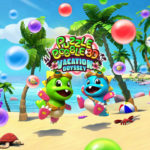
  • Puzzle Bobble 3D: Vacation Odyssey

    Puzzle Bobble 3D: Vacation Odyssey

    Developer / Publisher – Survios, Taito Corporation
    Price – US $19.99 / CAN $22.99 / EU €19.99 / UK £17.99 / AU $24.95
    Release Date – Octover 5th, 2021
    Input – 2 x Move Controllers, DS4
    Play Area –  Sitting, Standing
    Store – PlayStation
    Reviewed on – PS5

    Puzzle Bobble, or alternatively Bust-A-Move, is a franchise that has been around since 1994 and is a spin-off of one of my childhood favorites in Bubble Bobble for the NES.  It’s a franchise with over 20 titles across multiple platforms that saw a release for Quest headsets earlier in the year (review here) and has now received a PS4/PSVR port offering up slightly new ways to play thanks to releasing on the Sony console.

    Take aim and fire…it’s that easy!

    Using the Moves allows for identical play to the Quest version, having 1 hand load your next orb and pulling back on the slingshot(esque) launcher while the other hand holds the launcher.  You’ll be shooting at the various collection of orbs floating in front of you with Bub tossing you the next coloured ball while having 1 queued up which you can swap should that colour be of better use.  Also supported is the DS4 which removes the 2-handed slingshot aspect of the launcher with firing now being relegated to a button press.  You need to chain at least 3 balls together with any balls that are touching those 3, and are of the same colour, popping with the goal being to eliminate all the bubbles to get the core and destroy it.  Bubbles with stars in it will destroy any bubbles of that color while ones with skulls slow down your efforts by slowing down Bub while others change the colors of surrounding balls, blow up others and a few more additions as well. When you accrue enough coins, you can purchase single use power ups that can make any individual stage drastically easier with the initial cost being quite high though subsequent purchases cost much less.  These can let you blow up a huge cluster of bubbles, change their colors or spin all of them around.  There are 3 modes of play with the campaign being comprised of 100 stages, infinite mode let’s you play indefinitely until you fail or duel mode which has you facing off against another player online in some very frenetic efforts.  In addition to playing with other VR players, you can also play against other PS4/PS5 flat gamers which should increase the number of players to be found when playing online.

    Unlock special items to make things a bit easier.

    Puzzle Bobble VR looks really good as you are essentially taken on a tour of the island, visiting a variety of locales with the cluster of bubbles floating ahead of you.  You’ll find yourself playing on docks with an ocean view, ruins, cliff sides and plenty more areas, all taking place during different times of the day which is very noticeable by the stunning lighting effects at play.  Long shadows may blanket the landscape around you during a setting sun which also casts a light glow over Bub and your gun, making for some very immersive moments and I couldn’t help but just stop and admire my surroundings and gun as it reflected the fading suns light.  Bub is beside you with your next ball at the ready and animates fantastically, as if he were ripped right from a kid’s film, and your slingshot gun carries some fantastic details with little gears and rotors reacting to just how hard you pull back on the launcher.  The “story” if you want to call it that, is told by still frame images that occur every few stages but is honestly the most forgettable element in the game as it’s basically just a bad guy shows up, causes some trouble and now you need to play the game to beat him?  It doesn’t make sense and it doesn’t really need too as no one is playing a Puzzle Bobble game for the narrative.

    Sound design is also on point with what may be the most satisfying sound in the history of gaming when you launch your ball with a massively successful shot.  The slingshot gun sounds like it packs a punch and when you knock off a huge chunk of spheres, cheers erupt, and Bub celebrates as well, making for a solid audible reward.  The soundtrack is mostly harmless, recycling tracks from previous titles as well as some new ones but really is only here to ensure the game isn’t bathed in silence as there isn’t too much going on outside of your slingshot.  That soundtrack is a collection of forgettable, but upbeat tunes that keep the mood light and while they do fall into the background, they never really annoyed me so I’m happy with that.

    The lighting effects are really on point.

    Puzzle Bobble makes the transition to VR near flawlessly, staying true to the classic franchise in every way that matters and while the game is near identical to the Quest version, the PS4 version does have quirks. The light tracked controllers can cause some unintentional launcher shake which did mess me up when I was going for some very precise shots on more than a few occasions.  While you can play online with other PS/VR players, there is no way to play locally which does seem like a significant oversight as having the ability to play with friends and family in the comfort of your living room, switching from VR to not would have been a great way to introduce the medium to new players though this feels more like a missed opportunity more than anything else. While this is largely a VR review, I would be remiss if I didn’t mention just how much more difficult playing flat is, and should you play online, I can’t help but think the VR players will have an advantage, which I suppose is a good thing in some ways.   Besides those minor issues, Vacation Odyssey feels like a proper VR evolution of the franchise delivering on gameplay that we have come to know and love that is now made better by being in Virtual Reality.

    Play online in some frenetic action!

    Puzzle Bobble in VR works great, and I think fans of the series will dig this latest instalment despite the shift to 3D gameplay.  If you aren’t a fan of the series, for whatever reason, I doubt this will change your mind as while I do think it is better in VR, it’s ultimately still the same formula.  The duel mode really spices things up however and if you are looking for a slightly more chill experience in a headset, Puzzle Bobble delivers a charming, addicting and challenging game.

    What would I pay? This is $20 US and worth it for fans of the series as getting through the campaign stages will probably take at least a few hours and the additional modes offer some decent replay value.

    Survios provided The VR Grid with a press code for this title and, regardless of this review, we thank them for that!

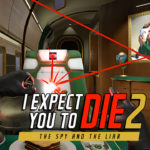
  • I Expect You to Die 2: The Spy & The Liar

    I Expect You to Die 2: The Spy & The Liar

    Developer / Publisher – Schell Games
    Price – US $24.99 / CAN $29.99 / EU €49.99 / UK £19.99 / AU $34.95
    Release Date – August 24th, 2021
    Input – 2 x Tracked Motion Controllers
    Play Area –  Standing, Seated, Roomscale
    Store – PlayStation, Steam, Oculus
    Reviewed on –Quest 2

    One of VR’s great success stories, I Expect You to Die has now gotten a follow-up, doubling down on the puzzles, action and super spy goodness that made the 1st so popular.  You’re back in the role of a special agent, thought dead after the events of the 1st game and are still tasked with thwarting Zoraxis who is till trying for world domination.  One minor note for this review is that I will be avoiding nearly ALL spoilers for the game including specific level interactions, plot and anything else the could spoil the fun.

    Following instructions isn’t always this simple.

    Those who have played the 1st game will be instantly familiar with the game mechanics as this feels almost exactly like the 1st title in almost every way.  It’s a seated, room scale affair that requires you to be observant of your surroundings and what you can interact with.  Should something be out of reach, you can use your telekinetic abilities to grab it and pull or push it away from you, letting you further mess around with stuff beyond the comfort of your chair.  A tutorial reintroduces the basic elements of the game with each of the 6-stages basically acting like an escape room, with you having to perform a variety of tasks to not only save the day but yourself.  It’s that trial-and-error mechanic that made the 1st game so rewarding as even in death, there is reward as you’ll oftentimes die in comedic fashion and learn not do make the same mistakes twice.  Each mission has hidden trophies to find, and a speed run time attached to it for those that enjoy that sort of thing, extending replay factor if you just can’t get enough espionage goodness.  In between missions you’ll find yourself in a van where the details of your next operation are revealed, and you can always revisit any previous missions.

    Every stage always starts off innocently enough.

    Further embracing it’s James Bond roots, you are treated to a very slick intro that essentially puts you in the song and as a fan of Bond films, it’s a damn cool song that uses VR in some very fun ways. Where the game may lack in environmental scope, it makes up for in polish as the details that litter each stage are commendable and enjoyable.  From the opening tutorial office, behind the curtains at a theatre performance as a stagehand, on a private plane and a few more locations that I won’t spoil here, everything in here looks great and, in my opinion, even a little larger than the 1st game with set pieces that feel a little more fleshed out.  In no way am I trashing the 1st game, which is great, but I found the stages in here to be just a little more…complete.  It’s always fun to see what the results of your actions are and what the game will throw at you as you never really know what’s going to try and kill you next.

    Your handler is back from the 1st game, guiding you with aristocratic English accent with a few other actors sprinkled in as well with one notable addition to the game in the form of Jon Juniper played by veteran voice actor and Trek alumni Wil Wheaton who does an excellent job at bringing a different kind of vitality to the game thanks to his duplicitous charm.  Beyond the voice acting and kick ass intro, is a game that relies heavily on the sounds around you with brief tunes only kicking in when you solve a puzzle or perish so whether it’s the sound of an incoming poison dart, deadly laser, or the air getting sucked out of an airplane cabin, the sound design is on point and is for all intents and purposes, flawless

    As a stage hand, you have a few jobs to take care of.

    Just like the 1st game, each mission won’t take more than a few minutes to complete provided you know exactly what to do but unless you watch a walkthrough before you play, which I don’t recommend, each mission will take much longer to get through…I’d say at least 30 minutes each, if not more.  That trial-and-error mechanic is the main draw, especially when some obstacles have a couple of solutions, allowing for a little bit of creative freedom in solving those dilemmas.  The game is room scale, but before you Quest owners start trying to run around the environment your actual play space is limited and venturing too far in any direction, even standing will result in your vision going black forcing you to return to confines of the play space.  This makes perfect sense but in 2 instances in the game, there were buttons that were just out of sight, and I was forced to half stand to see them fully or raise my hand very high to use my telekinesis which made those moments awkward, but never once was I stuck or did that hold me back, so it’s really a minor issue at best.  In truth, this next entry in the franchise feels like it could have just been 6 more DLC missions save for the overarching plot that links the story, which should appeal to fans of the 1st game as it picks off where the last game left off and felt instantly familiar the moment I put on the headset.

    You’re going to see this screen more than a few times

    IEYTD 2 doesn’t really tread any new ground when compared to the 1st game but builds upon the mythos of the spy world and is a still a welcome addition to what is now a franchise.  The puzzles are clever, unique, and fun and even in death, I couldn’t help but smirk at my own shortcomings before I hit that replay mission button to give it another go.  It’s addictive, rewarding and made me feel so smart and so dumb as I slowly deciphered the solution to the next puzzle, dying a whole lot along the way.

    What would I pay? $25 is a perfect price for this.  I expect most people won’t get through the game in less than 3-hours and even offers some replay value for those completionists out there or those just want to see how fast they can get through the game.

    Schell Games provided The VR Grid with a press code for this title and, regardless of this review, we thank them for that!

  • Blair Witch VR

    Blair Witch VR

    Developer / Publisher – Bloober Team
    Price – US $29.99 / CAN $39.99 / EU €29.99 / UK £24.99 / AU $42.95
    Release Date – August 12th, 2021
    Input – 2 x Tracked Motion Controllers
    Play Area –  Standing, Seated, Roomscale
    Store – PlayStation, Steam, Oculus
    Reviewed on –PSVR (PS5)

    The Blair Witch franchise is a weird one with its roots stemming in a VERY low budget late 90’s film that turned into a massive success, spawning sequels and video-game tie-ins over the following decades that have ranged in quality with more than a few falling on the lamer side of things.  Blair Witch VR is a port of the 2019 release which has you in the role of Ellis, a former local police officer with a troubled past who has decided to join in the search for a child who went missing in the Black Hills Forest.

    Say high to bullet, He’s about to be your best friend!

    Wandering through this supposedly haunted forest, you’ll need 2 tracked controllers with locomotion being handled largely by your left hand while turning is done with the right.  It’s a full locomotion affair though their options for teleport and click-turning should you need them with any items needed strapped to your chest including a flashlight, cell phone, camcorder, and dog whistle, all of which will be needed throughout the story.  Unlike almost all other horror titles, you are not alone as by your side is your trusty dog, Bullet, who not just helps guide you through the forest, but also just aids in keeping you company and stemming off madness and has a few commands that can have him stay close, seek out items and scents for you to follow or just give a him snack.  Ellis, you see, suffers from PTSD and is prone to bouts of paranoia and delusion but Bullet, always seems to centre him which matters more and more the further you venture into the forest and Ellis begins to lose it…or is he?  The Blair Witch franchise has always been about paranoia and the unknown and that combo has been gamified quite nicely with some light puzzle elements thrown in that make this feel like you are playing through a Blair Witch Movie.  The camcorder is arguably the coolest feature as not only do found tapes shed light on what is happening but playing those tapes in certain ways can affect the world around you causing items to appear where they weren’t before and even moving objects blocking your path. Throughout the game you’ll be in contact with the Sheriff via radio and your ex using your cell phone, which can be a fun distraction as it’s loaded with messages and games if you are looking to take a break from the horror.  When things get dark, and when you might find yourself alone, your light is your only ally and won’t just be needed to see what’s ahead but is used to defend yourself from the ghouls that stalk you during some sections.   The puzzle elements and more dramatic moments in the game keep this from feeling like just another VR walking simulator as the game throws enough mechanics in your path to keep things feeling fresh as you never know what the game is going to throw at you next.

    The camcorder is a great gameplay element!

    I’m not going to say Blair Witch VR is the prettiest game I’ve ever seen, far from it in fact, but it looks substantially better than Bloober Teams previous effort in Layers of Fear VR by often changing up your surroundings.  The game plays in a relatively linear fashion as you can only stay on the beaten paths in the forest with some sections only offering you the option to move forward along a singular cave path or in a vision marked with clear barriers.  You’ll start your search in the twilight hours with the sun offering a nice respite from what lies ahead with the game only getting darker and more solitary the longer you play.  When in the dead of night, the moonlit shadows of the treetops can just be seen while your finicky flashlight offers a narrow glimpse of what lies ahead, adding a great sense of trepidation, especially when you start to see weird things just out of sight.  You are just a pair of hands with your items floating on your invisible chest with Bullet being the star of the show as he guides you through the game, barking when he wants your attention and running off, always returning if you take too long to follow.  Environmental lighting is static with some trickery being used when it comes to your flashlight, lighting up whatever it’s pointed at, but never casting shadows, hampering immersion somewhat, but it still looks fairly good.  Most of the game is safe from pop-in thanks to the claustrophobic environmental design, but in some of the larger sections, and a mid-game rail car ride, distant trees and objects will magically appear once again hampering immersion.  As this is also a port of a flat game, the cinematics are not 360 but flat so you’ll just have to sit back and watch the 2D mini-movies and as they are still shown in 1st person view, they can feel a little awkward.  Delusions suffered later on can really mess with you as the environment may change before your eyes, your vision may shudder or darken and in combination with the dark and disturbing forest and the bizarre situation you find yourself in, it makes for a solid horror experience.

    A VR horror game needs proper 3D audio and Blair Witch delivers an on-point experience that gives the game a great cinematic quality.  Ellis often talks to himself or bullet creating a bulk of the narrations outside of the brief radio and cell phone calls you’ll be making and answering throughout the story.  The music is typically ambient, falling into the background with a subtle, unnerving hum when the situation demands a little more tension or may be a little apparent during some of the more dramatic sessions.  When you are just exploring though, it’s typically the sounds of the leaves crunching under yours and bullets feet in combination with the noises of the forest around you making up for the lacking visuals with some great audio design.

    The creep factor runs rampant throughout the game.

    AS much as I really enjoy this game, it’s not without fault though many of them are more tropes of the genre than actual faults.  Despite the extra amounts of interaction in the game, including some puzzles in the latter half that require some extra little bits of interaction, this is largely a walking simulator in the vein of Paranormal Activity or Here They Lie so if you haven’t cared for the genre in its previous iterations, I doubt Blair Witch will change you mind.  The game will take somewhere in the 6-hour mark to beat depending on how much you explore and search for hidden items which are rampant throughout the game.   Multiple endings are available but unless you use a guide, you’ll almost assuredly get the “Bad” ending which is by design though and does promote replaying the game as situations that seemed to only have 1 solution in the game, actually have 2 making the second playthrough quite different, especially during the flashlight monster encounters.  Despite Bullet being awesome, he can be a little annoying at times as he can incessantly bark while you are busy doing something else though ultimately, I can’t complain too much as his presence really was soothing and added a nice relief from the horror elements at play.  Lastly would be an issue with the Moves, which work near flawlessly, save when you need to mess with padlocks which requires two hands working very close together and caused a fair bit of frustration though there only a few of these in the game.   All of that said, if you are into walking sims, it might not look amazing, but the mechanics at play really make this one of the better ones I have ever played.

    Its not Blair Witch without a creepy house or 2.

    Suspense/Horror fans should rejoice, especially PSVR ones, as we haven’t seen too many entries in this genre in the last few years and few deliver an experience as in-depth as Blair Witch.  It builds upon the mythos of the franchise and while I am admittedly unfamiliar with the world outside of the 1st 2 films, I enjoyed the story in here as it felt like an interactive movie where I was the main character.  Throw in the multiple endings, solid performances, a high creep factor and an endearing dog and couldn’t help but be immersed in this game and enjoyed my time getting lost in the woods!

    What would I pay? the $30 US price on this is alright as the game delivers on the suspense, scares and story and offers some decent replay value thanks to the alternate endings.  If you have been clamouring for a little more scares in your VR diet, Blair Witch VR delivers the goods!

    Bloober Team provided  The VR Grid with a press code for this title and, regardless of this review, we thank them for that!