THE VR GRID

Reviews‘ alt=” id=’templ_icon_’ width=” height=” /> Hub Category: Reviews

  • Audio Arena

    Audio Arena

    Developer / Publisher – Skydome Studios
    Price – US $6.99 / EU €6.99 / UK £4.99
    Release Date – July 25th, 2016
    Input – Tracked Motion Controllers, Gamepad, Mouse/Keyboard
    Play Area –  Seated, Standing
    Store – Steam
    Reviewed on – HTC Vive

    Audio Arena is a single player game where the in-game music creates the game around you, spawning enemies to the beat of the music.  As far as I can tell the game was originally developed for the Gear VR and then ported over to the PC VR headsets. This causes a few complaints that we will get into later.
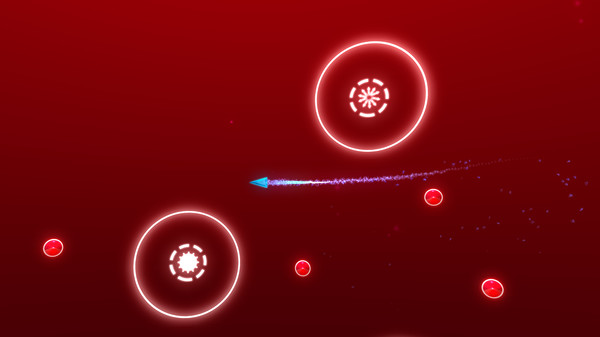
    What you see is basically what you get.

    Initially, Audio Arena is a lot of fun. You control a 2-dimensional spaceship and must avoid enemies. There are a few different types of enemies, ones that continuously move towards you, ones that move a lot faster on the beat of the music and a few more more. These enemies can “eat” each other and grow bigger and giving more points upon destruction. Enemies spawn on the beat and, while dodging all these enemies, you can also use power ups, which are bubbles that have a larger moving ring around them. When the ring is touching the power up, you want to smash into it, that is when it will be synced to the beat and be more powerful. These power-ups give you the abilities needed to kill the enemies. Power-ups range from small bombs to shields and a variety of projectiles.

    I own and have heavily played Audioshield, which is another VR rhythm game and I was expecting Audio Arena to be similar in a sense. I went into Audio Arena with almost no research as to what it was before playing. I expected to be able to choose from my own library of songs and it would generate levels based on that, oh how I was wrong.

    There are several stages or worlds of the game. Each stage or world has three songs to go through and each has several challenges to complete. These challenges range from world to world, but seem to mostly be along the lines of “get x points from one bomb” or “destroy an enemy of x value”. This got repetitive very quickly. Completing challenges gives the player “stars”. You need a certain number of stars to move onto the next world. This is not how I like my audio based games. If you are going to limit me to only the in-game songs, then at least let me pick from any of those songs, especially since just beating a song is not what helps you move on to the next world.
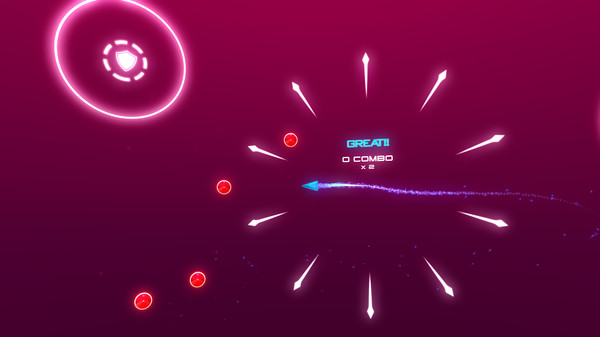
    Sometimes the game can look a little pretty and relaxing

    This is an audio rhythm based game. Since I don’t get to pick from my own music library, or search music online, then the soundtrack in the game better have a wide variety, or at least music that I enjoy. Sadly, this is not the case. The soundtrack in this game sounds what you might imagine elevator music to be. Sure, it’s not bad, but it doesn’t mean I want to listen to it. It’s more like it gets the job done and that’s all they cared about. This is my biggest complaint with this game. The day they make procedurally generated levels from the users music library, or from YouTube videos is the day I play this again.

    The music isn’t great, but what about the mechanics? Well, they’re just okay. Everything works fine, but you can tell that it was a port a more basic VR headset. You can only control one ship, and there is no 3D to the environment. You only control the ship on kind of the inside of a cone where you are at the center. There is no moving your ship towards or away from you, it always stays on that 2d plane. You don’t even need controllers to play the game, you can enable the “gaze” option and the ship just moves to where you look. If you do use controllers then all you are using it as is basically a laser pointer where the end of the pointer is the spaceship.  I wish it was a bit more like Xortex (which is a free mini game within Steams “The Lab” game), but with a rhythm aspect. The main mechanic of moving the ship around and hitting the power ups on beat gets old quickly. Not because it’s not fun, but you aren’t really punished much for hitting the power ups offbeat and operating it on a 2D surface within VR just isn’t as entertaining as it would be in conventional gaming.
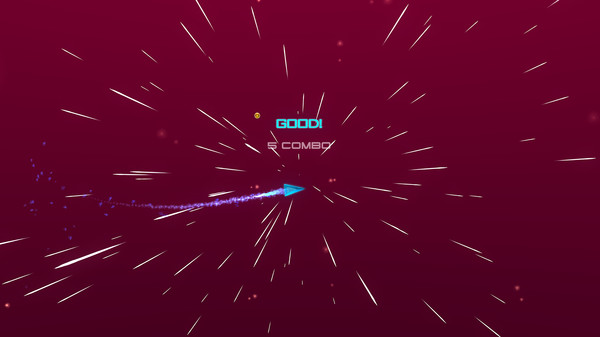
    Cuh-cuh-COMBO!

    I can see how this game would be fun on a system more limited such as Gear VR.. I still believe it to be a more 2d game that doesn’t quite work in VR. It can be a fun little mini-game, but that is all I would consider it, not a full-fledged game. Something you could play one song of every now and then and then forget about for months.

    What would I pay for this game? For a dollar it wouldn’t be bad as a quick game to play every occasionally. However, it’s price of $6.99 on steam or even its price of $2.99 on the Google play store is too high, unless they added some of the features I have discussed.

  • Happy Drummer

    Happy Drummer

    Developer / Publisher –Lusionsoft
    Price – US $9.99 / EU €9.99 / UK £7.99 / AU $14.95
    Release date – January 11, 2018
    Control Method –  2 x Move controllers
    Pro Patch – No
    Digital only – Yes
    Reviewed on – PS4 Pro

    Regardless of how I feel about a specific game, I love playing new genres in VR and while some may lump this in with games like Thumper or Starship Disco, Happy Drummer stands on its own as being a rhythm game that I think many will like.

    Get ready to drop a beat!

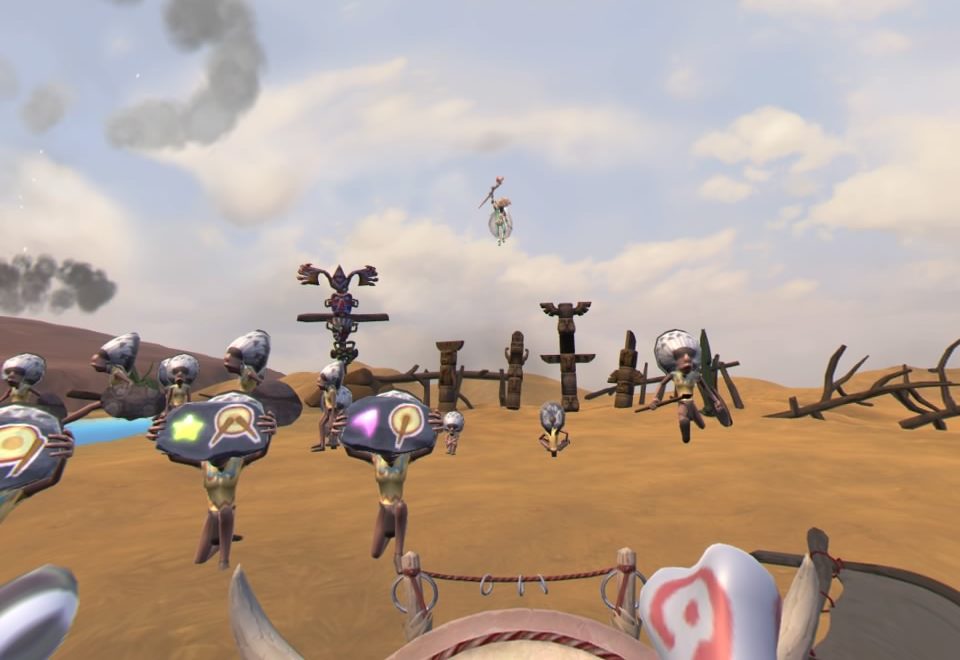
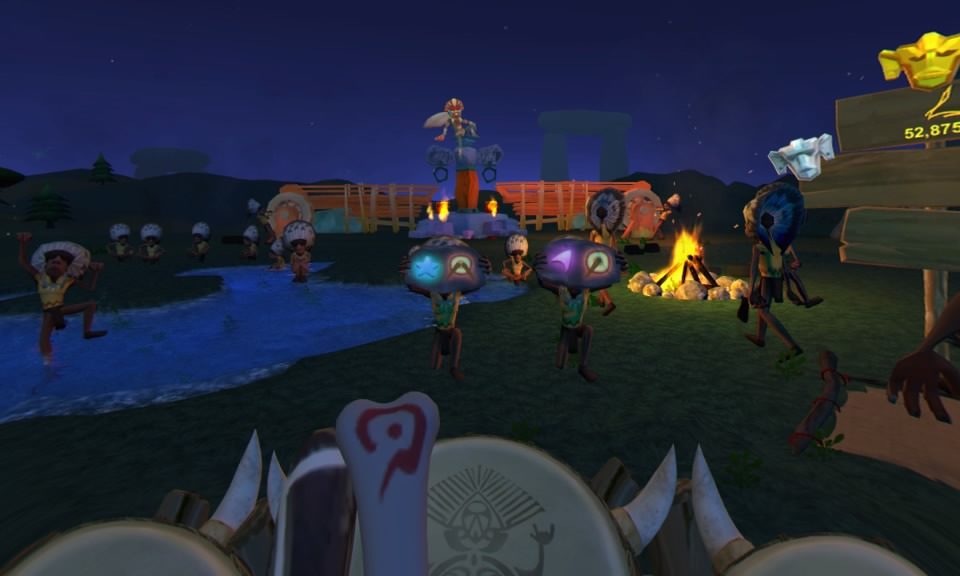
    Happy Drummer is both in VR and non-VR, but for the sake of this review, I’m basically going to ignore the non-VR stuff.  Utilizing 2 move controllers you need to bash 1 of the 3 or 4 drums in front of you as arrows, stars and rings fly toward you which drums you need to hit.  It’s easiest to compare this to rhythm games like Guitar Hero, only to the beat of the drum. Only on the hardest difficulty did I really miss having actual drums in front of me but by no means is the lack of real objects to bash game breaking.  Arrows require you to hit a singular drum, stars require you to hit a drum with both sticks/bones and the ring means you need to tap the rim of the drum.  Easy in writing, but depending on which difficulty you play on, things get nuts!

    There are only 2 stages, and each contains 4 songs with 3 difficulty levels each.  There is an additional song that lets you drum to your own beats, but it’s really only for those that just want to mess around.   I loved the difficulty levels here as each felt exactly like it should.  Normal provided little challenge and allowed to progress with ease at that level.  Hard ramps up the pace nicely and I ended up scoring a ‘good’ rank more than anything else.  lastly is ‘Lunatic’ and it is aptly named.  The prompts that fly your way are fast, frenetic and induce a sense of almost utter hopelessness as you try and keep up.  That said, just a little practice goes a long way and it wasn’t to long until I was holding my own at this difficulty, though reaching the global high scores still seems like an impossibility at this point.
    Day or night, the game stays the same

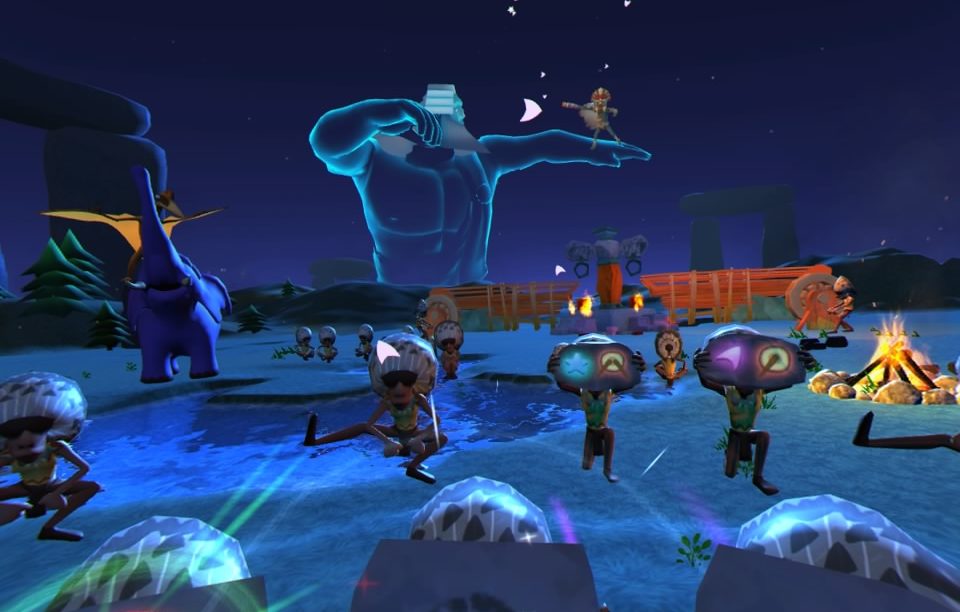
    The 2 stages are slightly different in design and switch off between day and night.  Some Native American dudes dance around you while the chief(?) seemingly summons the prompts from the sky above you.  Each song adds some odd audience members in the form of dinosaurs, lizards and maybe even a Greek god, each who dances along to the beat.  Everything is cartoonish in style and does look a little on the cheap side.  None of the models carry a lot of detail and animations are recycled and often janky with the overall look of the game being a little cheap.  On the audio side, the songs are all harmless fun with no vocal tracks, just instrumentals that require you to supply the beat.  Truthfully, the songs really blended together, and I had a hard time distinguishing one from the next.  With that said, I didn’t really care about that as the challenge of each song distracted me from both the audio and visual foibles.

    As I mentioned, you are ranked on just how well you do and obviously the better you do, the better your score and rank.  Should you do to poorly though, the game will not let you proceed to the next level.  There are also leaderboards, both local and global and while global is the standard chart listing the top players, local offers up an interesting little addition.  Upon finishing a song, you can draw an image into a board and that image is then displayed above your name.  It’s a cool little distraction that does make you care a little more about score chasing.

    Well, I have never seen Zeus do that before

    By no means is this amazing, but I still had fun.  The visuals are below an expected standard and I would have liked a few more stages but I can’t deny just how much I enjoyed my time in Happy Drummer.  It scratches an itch I wasn’t aware I had and seeing myself improve in only a short amount of time is motivating me to come back and see if I can’t master each stage.  If your looking for a short fun time in VR and another game to challenge your friends in, than Happy Drummer is probably for you.

    What would I pay? The $10 asking price is fine for this.  You could breeze through all the songs in around 30 minutes or so, but to master each song will take you probably closer to 2 hours depending on just how mad your skills are.  This is some good, clean fun!

  • Lone Echo

    Lone Echo

    Developer / Publisher – Ready at Dawn
    Price – US $39.99 / EU €39.99 / UK £34.99
    Release Date – July 20th, 2017
    Input – Oculus Touch
    Play Area –  Sitting, Standing, Roomscale
    Store – Oculus
    Reviewed on – Oculus Rift

    Lone Echo is, quite frankly, a glimpse into the future of what VR can achieve compared to traditional monitor/tv gaming.  If this game was played outside of VR it would be a disappointment, yet I would rate it as my personal favorite VR game. It isn’t the longest, fastest, prettiest or most exciting game I have played but what it does right is immerse you in the story and really make you care. The game starts off with you “Jack” being a work robot programmed to assist the human captain Liv run a mining station that is orbiting Saturn. The setup is simple, but despite being a robot helper it is impressive how much of a connection you end up feeling with Liv.

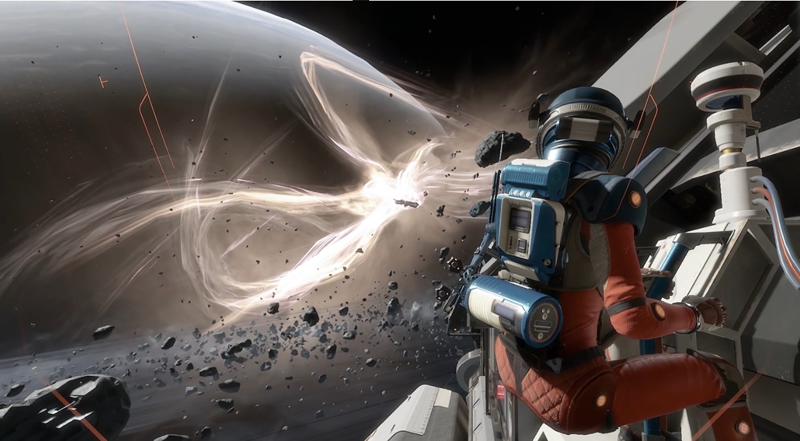
    Lone Echo has ome of the mot mesmerizing settings I have ever seen in VR

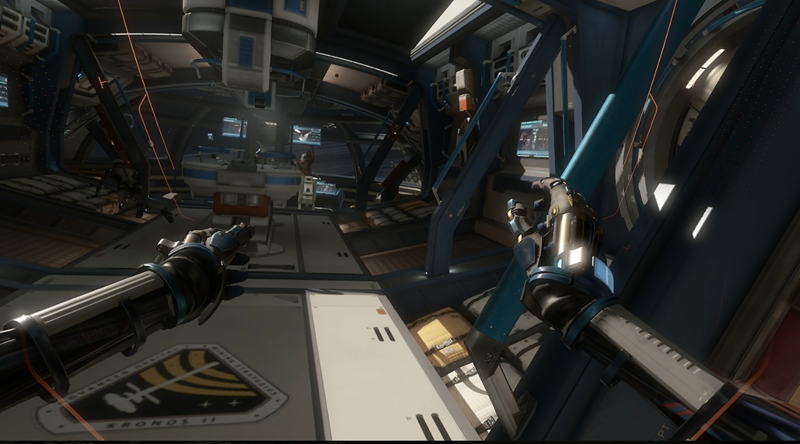
    The game has you “booting up” in a room with Liv. This bootup sequence is used as a mini tutorial that has you slowly “rebooting” different systems as needed providing you with a small task to accomplish using the new concept/tool. Motion is handled via momentum redirection using your hands, small rocket boosters on your wrists and a larger booster on your back. The wrist boosters provide small propulsion in the direction your hands face, while the back booster provides a big boost in the direction you are facing. The most accurate and easiest method to get around is to just use your hands and toss yourself in the direction you want to go. These concepts combined with the wonderful physics really make locomotion in this game a ton of fun.

    The Zero-G environment is fun to float around in!

    Your primary gameplay here is to float around in zero G and perform “tasks”. This sounds incredibly boring on paper, which is one of the reasons I point out that this really is a VR only experience. The other part that really brought me in was the connection with Liv, which due to her facial expressions and just interacting with her as if I was with her led me to feel more connected to her. I don’t want to spoil anything but do consider that the next sentence contains a mild spoiler, if you wish to skip it please proceed to the next paragraph. At one point in the game Liv’s life is threatened, I was so immersed in the moment that I attempted to fling my own virtual body between the source of danger and Liv.

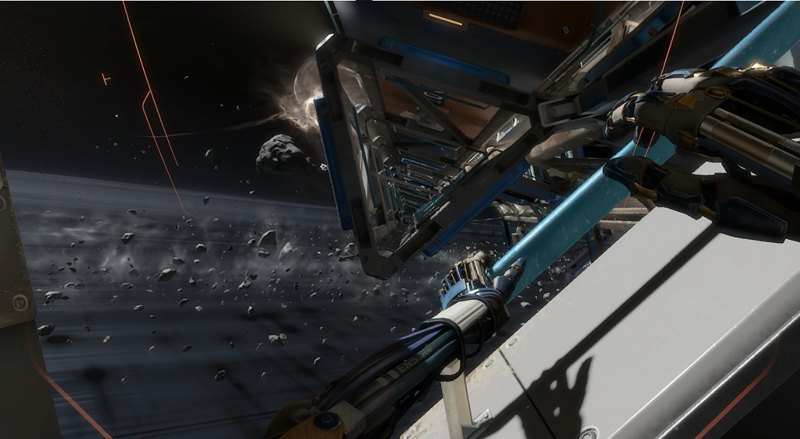
    You will also get to explore some beautiful sights, particularly the mining area around the rings of Saturn. Just floating around here is wonderful. The latter parts of the game are more indoor focused and are much less visually stunning but there are still moments scattered around. By the end, the story will most likely have you hooked so the less frequent sights won’t be too much of a bother. The game ran smoothly for me, but I have heard reports of it being stutter on systems with 8GB of ram or less.
    Absolutely stunning!

    There is also a multiplayer option that has really taken off in popularity. This is basically zero G basketball (or quidditch without the snitch for those who prefer a Harry Potter based analogy) pitting two teams against each other trying to get a disc through a goal on the other side. What makes this mode fun, is once again, the excellent movement system. I personally found it to be a fun distraction but since the sights and immersion are what really blew me away this was not much more than a side attraction for me.

    What would I pay? I tend to be a little on the cheap side and I almost never recommend buying a game at full price, but this is an exception to me. The single player campaign lasted me only about 8 hours, but it was also one of the most interesting and impactful VR experiences I have yet had and fully recommend this game at the full price of $39.99.

  • Speedball Arena

    Speedball Arena

    Developer / Publisher – Reality Reflection
    Price – US $9.99 / EU €9.99 / UK £7.19
    Release Date – November 15, 2017
    Input – Tracked Motion Controllers, Keyboard/Mouse
    Play Area –  Seated, Standing
    Store – Steam
    Reviewed on – HTC Vive

    Speedball Arena is an extremely fun sports game that feels akin to Rocket League in VR. Players face off in teams of two, in a massive, sci-fi stadium, using grappling hooks to launch an oversized ball into the opposing team’s goal. This game is extremely simple, and suffers from a lack of any player-base, but has developed into a fun and exciting game that’s worth revisiting.

    Speedball Arena provides players with a rocket-powered car, with a grappling hook. The left controller steers, with your hand on the handle, and the trigger accelerates. Your right hand holds a large rifle, and while you can’t shoot enemy players, you can launch a grappling hook at the ball from anywhere in the map.

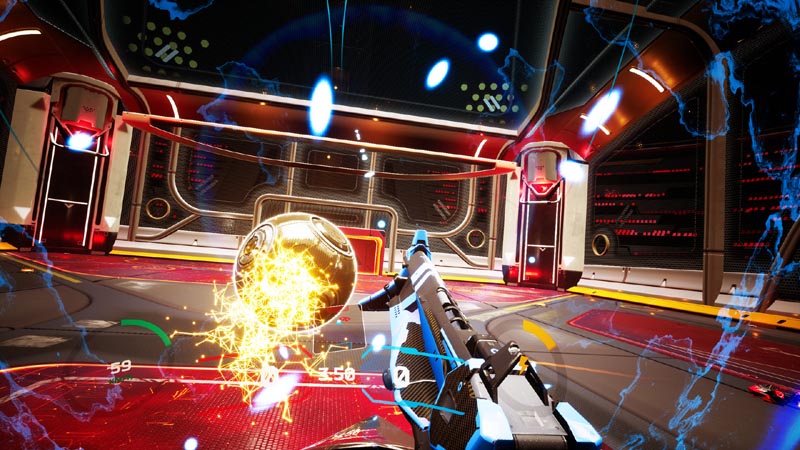
    When the ball drops, it’s an immediate frenzy seeing who will be the first to grab it.

    While it would’ve been nice to have more than one map, the map present is extremely well designed and visually appealing. Throughout this stadium, there are booster pads that speed you up when you touch them. There are also giant orbs that dangle from the ceiling, and grappling them flings you across the stadium at breakneck speeds. You can also jump, and enable turbo acceleration. All these options keep the game exciting and adrenaline-filled, and gives you decent freedom of movement.

    Since the hook travels at a realistically slow rate, it becomes harder to grab the ball the further you are from it. This not only allows some impressive trick-shots, but also gives the game a nice difficulty curve. I started out terrible at the game, but quickly gained skill as I gave it my patience. Single player mode contains easy, medium, and hard difficulty settings, and the challenge offered varies on a fair basis. On hard difficulty, for example, your AI teammate actually passes the ball to you, which it doesn’t do on easy or medium difficulties. This AI, in general, is very skilled and is fun to play against. Their behavior resembles that of real players quite well, and keeps the game fun.

    It’s a relief that this game has solid AI, because you will certainly never be playing with anyone else. The game’s player-base is totally dead, with zero active players and zero active servers at any time of day. Even if there were other players, I’m not confident that multiplayer is even playable: To work around the lack of players, a colleague and I arranged to play a round of multiplayer. After struggling to join each other’s lobbies for a while, we conceded that it probably isn’t possible to do so. I tried joining his open server through Steam, and the game launched me into a single player bot match. This may be the result of a glitch, but even if it worked, there are few (if any) people that seem to play.

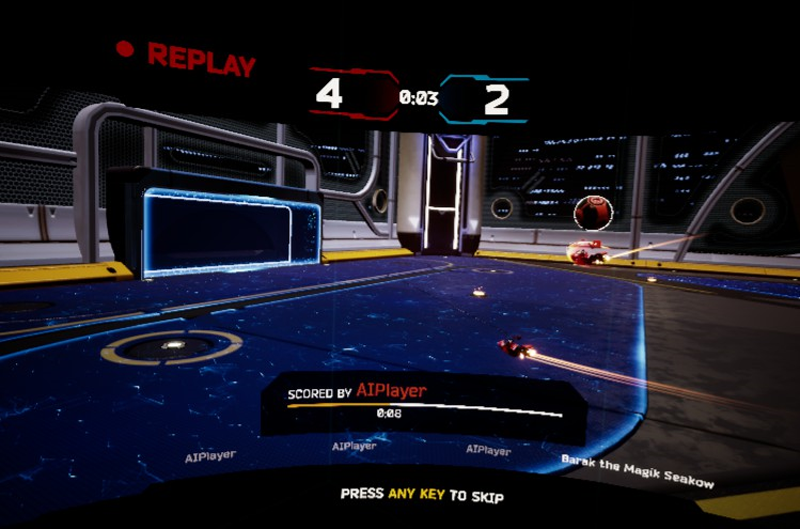
    Replay cams are well-done, and it’s exciting to see how impressive my last goal was.

    Each round of Speedball Arena only lasts about five minutes. With only one map, and dead multiplayer, the game remains the same every time you play. Playing on a different difficulty setting is the only way to modify gameplay. As a sports game, it’s only as replayable as you make it. You can play many times without getting bored, but it nonetheless grows repetitive quickly. After only one round, you’ll technically have experienced everything Speedball Arena has to offer.

    Movement controls are also an issue. While steering, accelerating, and shooting all work fine, the “jump” and “turbo” buttons are configured to very specific parts of the trackpad, making it tough to use them while keeping control of your car. Speedball Arena also has slight calibration issues: when launching the game, you must stand (or sit, as you’re driving a car) exactly where you want your seat calibrated. This can be frustrating, since steering requires keeping your hand on a lever. If the game thinks you’re closer or further to the lever than normal, the sensitivity of your steering can make it hard to play, and requires restarting the game so it recalibrates.

    Speedball Arena features a non-VR option as well, which works very well and keeps the game fun if you don’t feel like putting on your headset. This mode makes the game’s controls much easier, and doesn’t sacrifice any exciting, fast-paced gameplay. I still enjoy the game’s standard VR mode, and non-VR is a solid addition that adds to the game as a whole. The only issue with this is that launching Speedball Arena in non-VR still launches SteamVR, and turns on the headset. This isn’t particularly a problem- but players without VR, who just want to play the game, will likely have to install VR software to get it running.

    Most of the visuals are bright,colorful and fit the game nicely

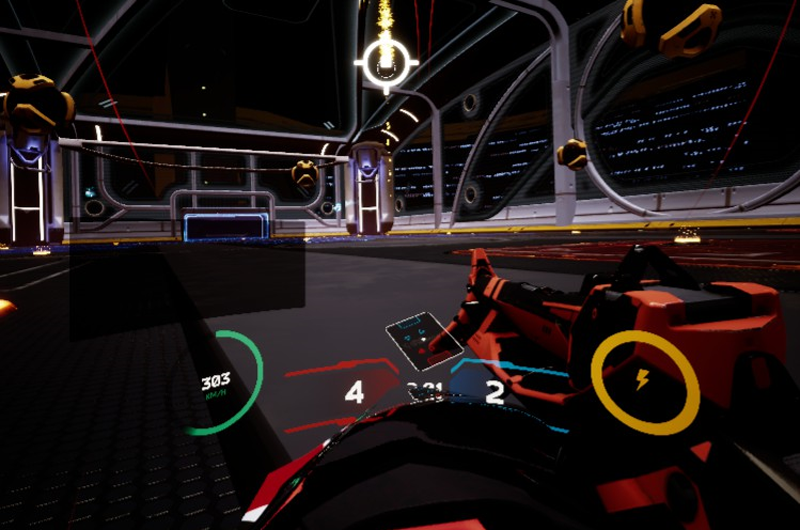
    The graphics in Speedball Arena are very good, with bright lighting and crisp textures. It runs very smoothly, which is necessary for a game this fast paced. Its user interface is easy to navigate, although I have mixed feelings about the heads-up display. All the information on-screen feels important, and isn’t too obtrusive to the gameplay. Still, it takes up a huge portion of the screen. There’s also a blank grey box that covers part of the screen for no reason.

    Speedball Arena is an incredibly fun and exciting soccer experience that has potential to become the VR equivalent of Rocket League. It might have some serious problems, such as being repetitive or having a dead player-base, but the experience is fun enough to be worth revisiting on occasion.

    What would I pay for it? I would pay $10 for Speedball Arena, which is its retail price. For fans of soccer or Rocket League, this game is worth picking up. Just don’t expect anyone else to be playing multiplayer.

    Reality Reflection provided a review code and, regardless of this review, we thank them for that!

  • Out of Ammo

    Out of Ammo

    Developer / Publisher – Rocketwerkz / Zen Studios
    Price – US $14.99 / EU €14.99  / UK £11.99 / AU $22.95
    Release date – January 30, 2018
    Control Method – 2 x Move Controllers
    Pro Patch – Yes
    Digital only – Yes
    Reviewed on – PS4 Pro

    Look out everyone…IT’S A GENRE MERGE!!!! What do you get when you mix 1 part FPS and 1 part RTS? An FPRTSS of course!  Ever since I played my 1st RTS oh so many years ago, I dreamt about taking command of a singular unit and becoming more than just a commander, but a lone hero on the battlefield.  Now we get that chance in Out of Ammo!

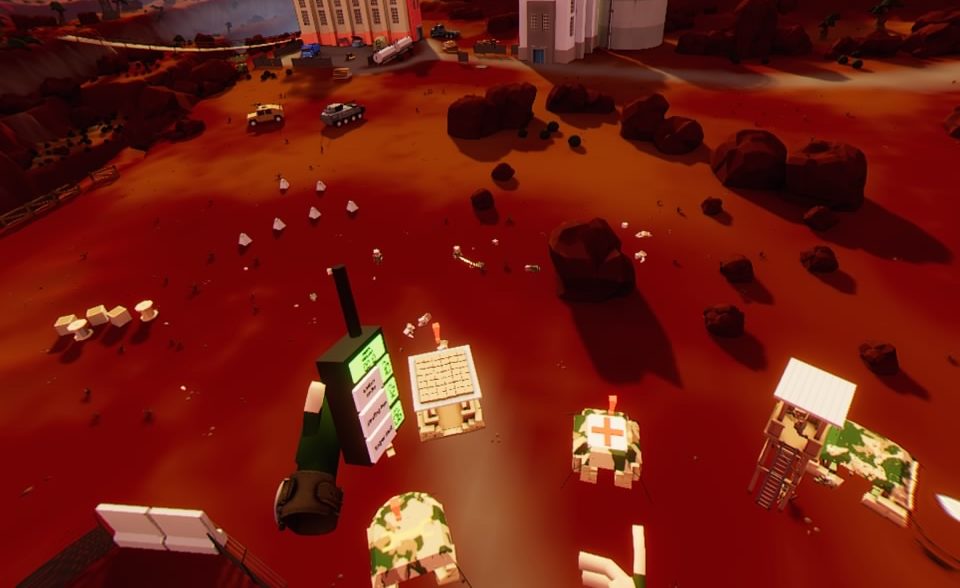
    You’re typical view of the RTS action!

    The controls here are both satisfying and frustrating. Requiring 2 move controllers, when you are allowed to move, in first-person mode, it’s teleportation and 90 degree click-turning only with ‘X’ on each controller turning you in that hands direction.  I have no choice but to keep lamenting these ‘comfort’ options as they pretty much do the exact opposite for myself, making games frustrating and uncomfortable to play. When in RTS mode, your view is stationary above a battle field whereupon you can direct and build units by highlighting and selecting options from a pop-up wheel.  Depending on your angle and view, sometimes selecting units and wheel options can be cumbersome, especially when those objects are right below you.

    The gunplay is much more satisfying with an emphasis on realism that both hurts and helps the game.  All the weapons you handle need to be reloaded, which means you need to remove the old ammo, grab the next case, clip or bullet from your belt and place it back in the gun.  I appreciated this mechanic, but there are a few issues with the controls that I’ll cover later on.

    Each level offers up it’s own unique elements, but ultimately plays the sameThere are only 2 modes available here, one is a never-ending RTS in 1 of 8 stages, where you must manage whatever drop-offs the game gives you and setup defenses to fend off never-ending waves of enemies. Setup a few buildings, assign a class to a troop and send them on their way.  It’s all very simplistic, but when it works it provides some entertainment.  At any time, you can possess any of your soldiers and turn this into FPS and help dispatch your foes with a little more efficiency than your AI soldiers.  Once again, when this works, it’s fun.  As the commander you are also given the option for targeted strafing runs, missile strikes and focused sniper attacks which should be used when the situation becomes a little more hectic.

    The other mode is first person only and places you in 1 of 3 situations where you need to ride out the clock and survive.  I thought I would like this mode a lot more than the regular RTS section, but a host of technical issues get in the way of this ever truly being fun.  The first stage is a botched spy mission that throws a bunch of enemies at you from all sides while you take them out with a single shot shotgun that needs to be reloaded EVERY TIME you shoot.  The second is a Sniper mission with you in a bell tower defending a nearby crash site from incoming enemies.  The last has you as the crash victim in a small area and, armed with a pistol, you must kill the encroaching enemies while scrounging for ammo.  Like the rest of the game, this mode is fun…when it works.

    It’s a minecraftian look we are treated to and for the most part, I liked the visual style here.  In RTS view, the levels have a cartoonish design and I thought they looked good.  Lighting effects look good and though nothing carries any amount of crazy detail, I didn’t mind that here.  When soldiers and objects are at a distance they can look like pixelated messes with the only real way to tell enemies from the environment being the difference in colors between the 2.  The audio is  in stereoscopic surround sound so in FPS mode, your only clue to the next guy trying to take you may just be the sound of his gun firing behind you.  The same audio cues are present in the RTS mode as well, but matter much less as you have a much larger view of the play area.

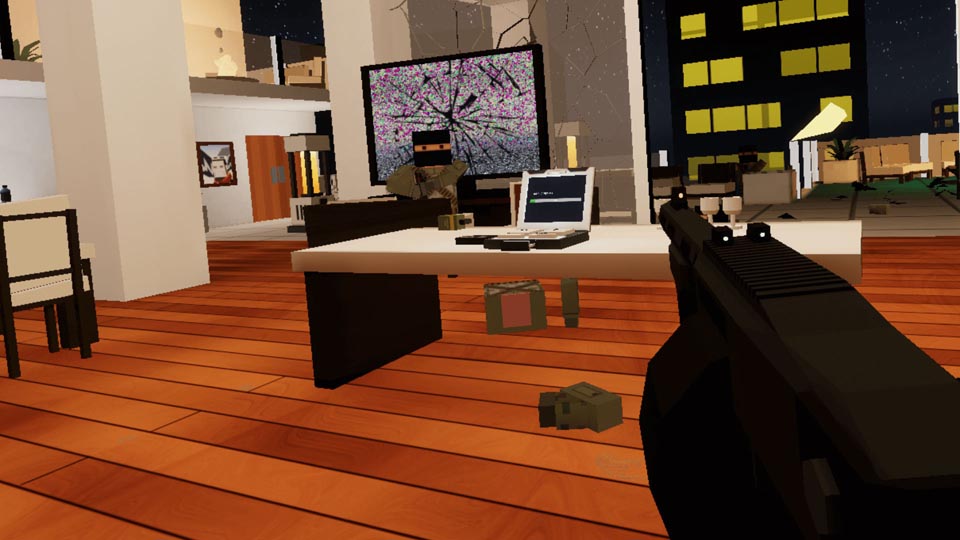
    This level sucks and I hate it!

    Alright, now for the issues.  In RTS mode, you are stationary, which is fine minus the fact that items can appear directly beneath  you and the action could take place there as well.  Trying to grab an item below you involves some awkward body positioning or turning 90 degrees in the game then physically turning back to the item you want to touch which is now a little easier thanks to the slightly different viewing angle.  The reloading mechanic here involves removing the old ammo and grabbing at your waist(ish) area for the new clip.  The sweet spot for the ammo to appear at your waist and in your hand is either very small or slightly randomized to drive the player insane.  Maybe half the time I managed to grab ammo on my first grab with most requiring 2 or 3 attempts before it appeared.  When things are chaotic, this is just unacceptable.

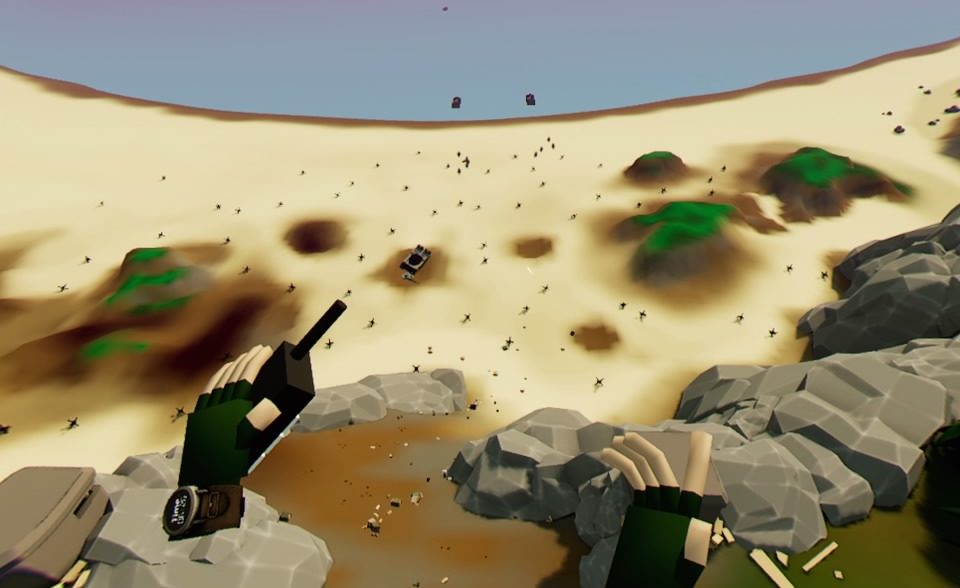
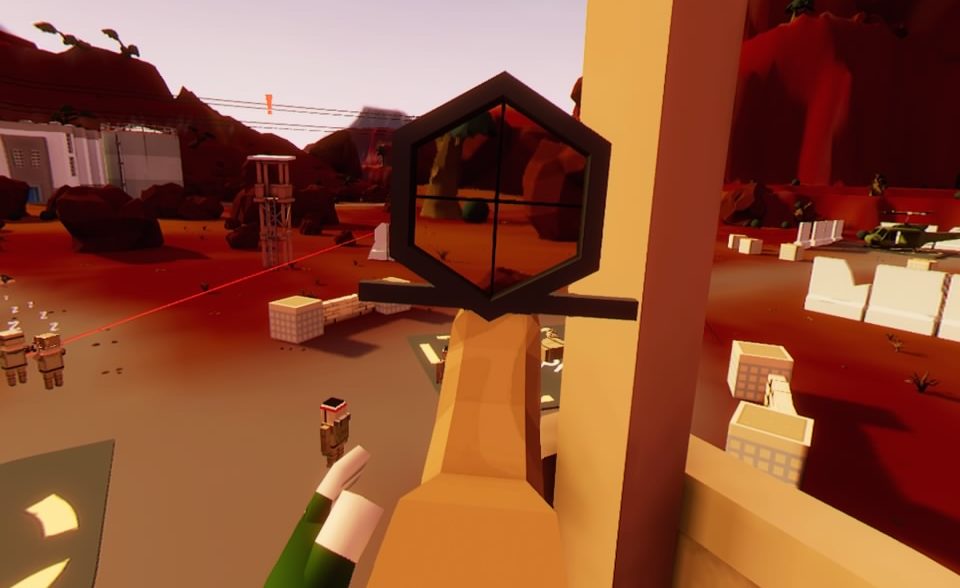
    Sniping is still the most satisfying part of this game for me, but that’s not the praise it should be. The sniper rifle is 1 shot, so after you miss, you must pull the chamber lever back, remove the bullet out, reach down and (maybe) grab a bullet, place in the chamber and reset the chamber.  From here you can fire again…and probably miss.  You need to physically hold the scope up to your face and aim by ever so slightly adjusting your move controller to line up your foe in the gun’s sight.  Whether it’s some in-game mechanic, the less than perfect move controller tracking, or my own shaky hands, lining up a shot is a feat on its own.  Whenever I sniped someone, it was so satisfying and rewarding, but each time I missed I was forced to do the whole reload thing again, line up my shot and more than likely miss again and it honestly just wasn’t worth it.  Oh, the shotgun is also 1 shot, which is absolutely ridiculous on the FPS mission, especially when a headshot with shotgun close up may not even take an enemy out.

    Whenever you actually snipe someone, it’s oh-so satisfying!

    At the end of the day I think Out of Ammo works more than it doesn’t but when combined with the repetitive RTS sections, the 3 singular missions which are frustration more than fun, and overall basic gameplay, it’s easy to get sick of this and move on.  There is a 2 – 4 player co-op in the game, which is great, but doesn’t really alleviate any of the issues I mentioned, except you can see who gets tired of playing and quits first.  On paper Out of Ammo sounds like something I have been waiting years for and now that it’s out, I’m still waiting.

    What would I pay?  Ha ha, this one is a bit tricky.  I truly had some fun moments here, but it just gets old fast.  $10 seems a little more apt here and with luck, future patches may alleviate issues I mentioned making for a more consistent and fun game.


  • Lost in the Rift – Reborn

    Lost in the Rift – Reborn

    Developer / Publisher – Enno Gottschalk
    Price – US $4.99 / EU €4.99 / UK £3.99
    Release Date – November 21st, 2016
    Input – Tracked Motion Controllers, Gamepad, Keyboard/Mouse
    Play Area –  Standing
    Store – Steam
    Reviewed on – Oculus Rift / Lenovo WMR

    Lost in the Rift-Rebirth is an older VR title, but still manages to bring the chills. Throughout it’s short play time, I constantly felt my heart speed up, and found myself checking behind me to see if I was being followed.

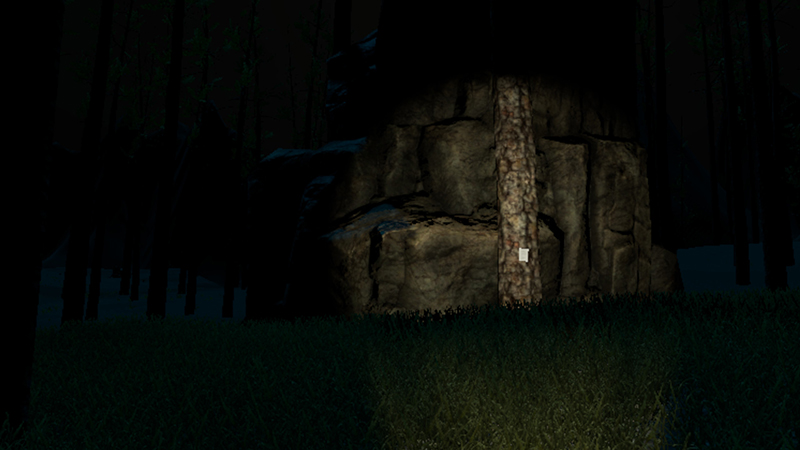
    Notes only add to the creep factor

    Gameplay is simple enough: leaving your camping tent, you have a lighter and a flashlight, and you wander around finding bits of the story written on paper. Sound familiar? If you’ve played an indie horror game in the past few years, you will feel right at home here.  Dreading the worst, I often found myself stopping and starting to keep myself relaxed and to keep my nerves at bay. Unfortunately, I also found myself starting and stopping due to the control scheme.

    While it is hard to judge Lost in the Rift too harshly since it was released before VR controls had really been more refined, I have to bring it up. The player moves in all directions using either thumbsticks or a trackpad, but something still didn’t feel quite right, and I can’t put my finger on it. I recommend most players turn on moving in the direction you are facing in the options, as this worked best for me.

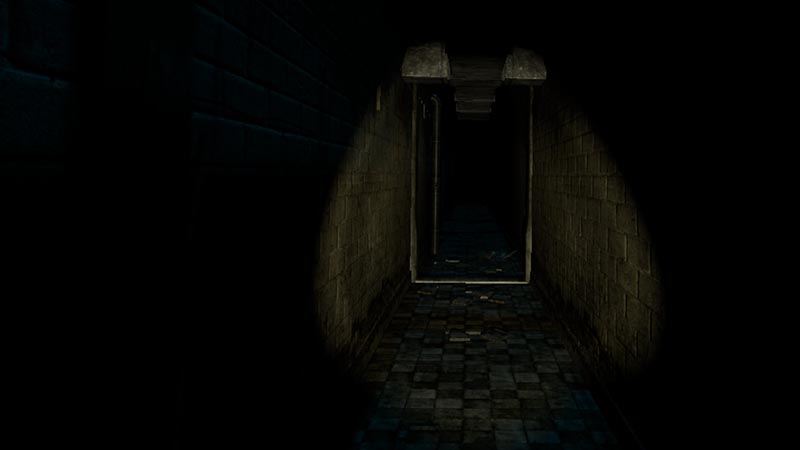
    Other than the issue with movement, I had no problems. The woods, and what I can only assume is an insane asylum, were creepy enough to make me feel uneasy. The sound design in particular stands out and what makes this experience particularly creepy. Audio cues, and even the lack of audio cues help increase the tension. You know you are with something but can’t quite figure out what. Spawning into the game, I was a bit surprised about how much it felt like I was in the woods, and I’m not new to VR; and the audio was a big part of this. It had that eerie quiet of the woods when you go camping far away from civilization.

    Yup, creepy claustrophobic hallways are here to keep you edge.

    Briefly, I’d like to talk about horror games and their settings. Woods? Fine, I don’t have a problem with that. Asylums? Can we not? Turning to the mentally unwell leads to further stigmatize mental illness. Abandoned hospitals and asylums aren’t scary because of the people that were in them, they are scary because of their atmosphere. So please, if you are a dev and are in need of a location, instead of an asylum, how about a creepy dilapidated library? Or city hall? Or store? Or business building?

    Overall, Lost in the Rift-Rebirth is a solid horror title. With the small amount of content, it does a good job creeping the player out, but I just can’t help thinking there are newer games that do what Lost in the Rift does better.

    What would I pay? I would pay $2 for it to scare your friends, or if you have played most of the other horror games and really need something to creep you out.

  • Pierhead Arcade

    Pierhead Arcade

    Developer / Publisher – Mechabit Ltd / Archiact Interactive
    Price – US $14.99 / EU €14.99  / UK £11.99 / AU $22.95
    Release date – January 30th, 2018
    Control Method – 2 x Move Controller
    Pro Patch – No
    Digital only – Yes
    Reviewed on – PS4 Pro

    Considering how long the PSVR has been out, I’m actually a little amazed by the lack of mini-game collection type games we had released on the system.  By my count, up until today, we only have 1, Carnival Games.  Considering the insane amount of them that were released during the Wii’s run and the similarities in controls between the Nintendo console and Move controllers, it seemed inevetible that we would be treated to the same onslaught of shovelware titles.  Thankfully, that hasn’t been the case at all and now get a 2nd collection of games that offers up some fun, frustration and something many of us have been waiting for since the PSVR’s launch.

    Pick a game, any game!

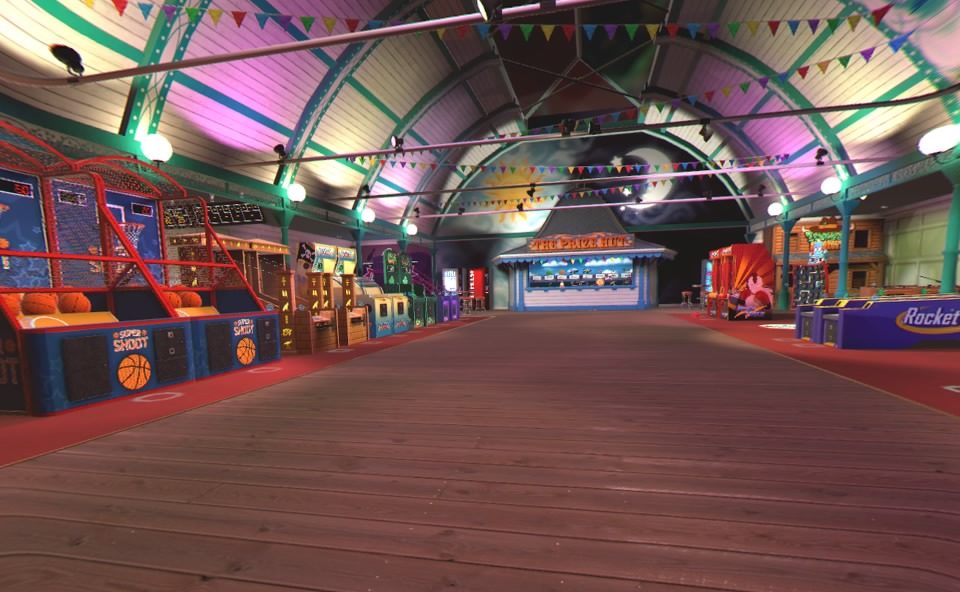
    Minus the opening tutorial screen, the entire game takes place in one large room.  Walking around the room is done by teleportation (ugh!) and click-turning(double ugh!) and is actually a little bit of pain as a compass pops up when you want to turn whereupon you can pick the direction you want to face.  In this instance, just a simple 45 degree turn would have sufficed.  All the games have waypoints in front of them that set you in a proper place to play the game, though you can leave and jump around whenever you want.  To start a game, simply point at the coin slot and tap the move button to place a coin in the machine and start playing.  Each of the 15 games offers some different mechanics and typical of the mini-game genre, there are as many good ones as bad.

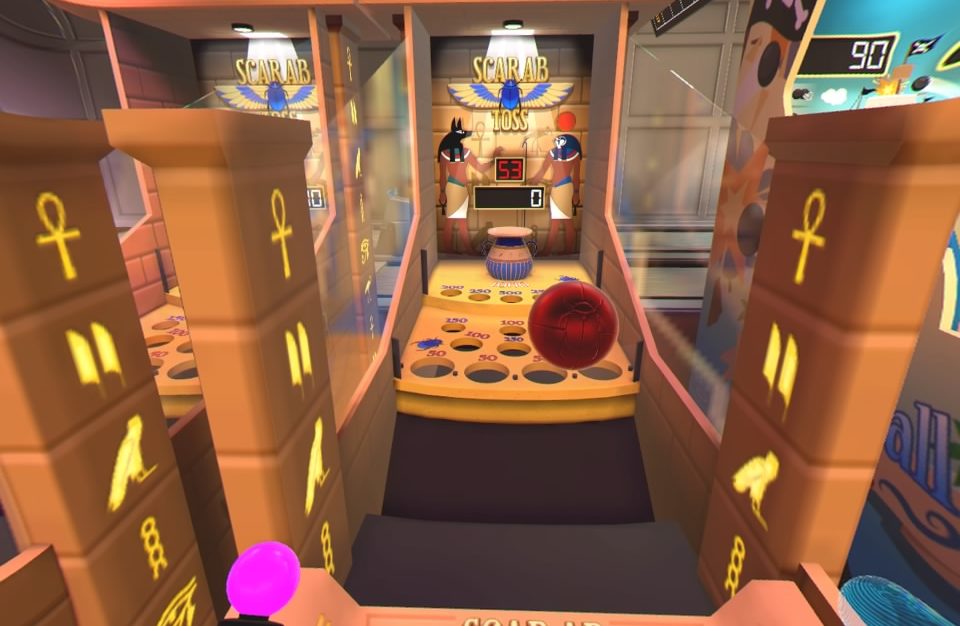
    There are a host of games requiring to throw some type of ball into some type of hole, whether it be getting a basketball in a small net, bouncing ping-pong balls into a small square grid, or just tossing balls into holes on a wall or a vase.  Each one of these ball throwers is basically forgettable and while not inherently bad in anyway, didn’t keep my interest for more than a few rounds.  There is a whack-a-mole type game, a boxing game where you can punch pads that pop up, 2 shooters, one with a pistol and the other with a shotgun which requires the use of both hands.  There is a shuffleboard table, a bee game that requires you to lift a ball up a wall while avoiding holes, a light game where you need to hit the green lights and avoid the red ones.  An odd comet game that requires to tap a button to drop a ball onto a rotating game board and that’s about it.  Oh no, wait, I forgot to mention that we now get our 1st VR version of VR BOWLING in this collection and while it may not be perfect, it ain’t to bad either.

    Get ready to throw a lot of balls!

    The games aesthetic is…there.  What I mean to say is while nothing here looks inherently awful, nothing stands out as being anything other than serviceable.  The singular room containing all the games looks fine with some decorations scattered about.  It’s bright and colorful and pleasant to look at.  Most of the games contains some sort of lights or small animations and do feel like accurate representations of there real life counter parts.  Once you start a game, you may be treated some thematic music and once again, it works, but isn’t anything to special.

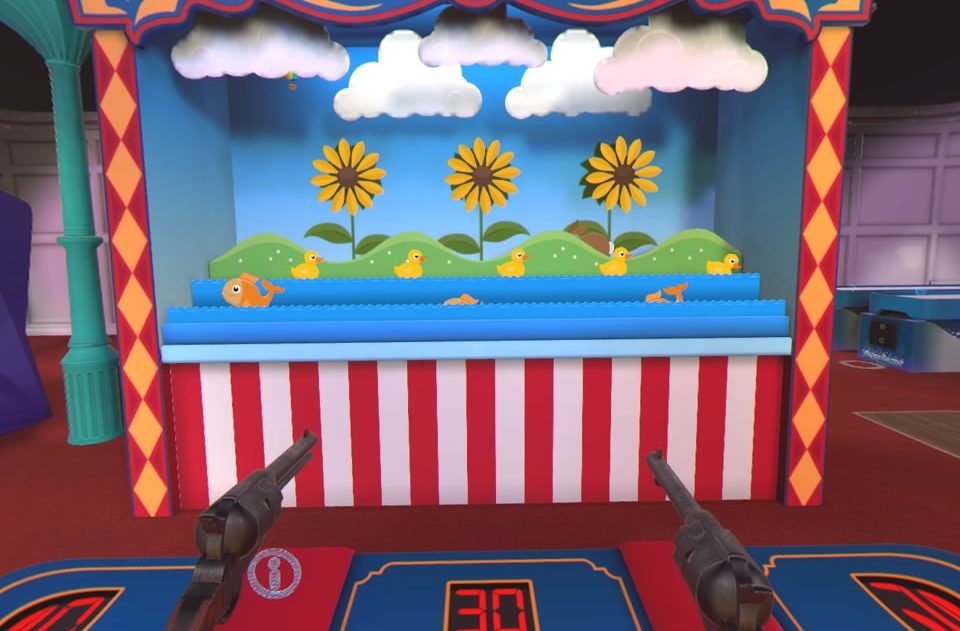
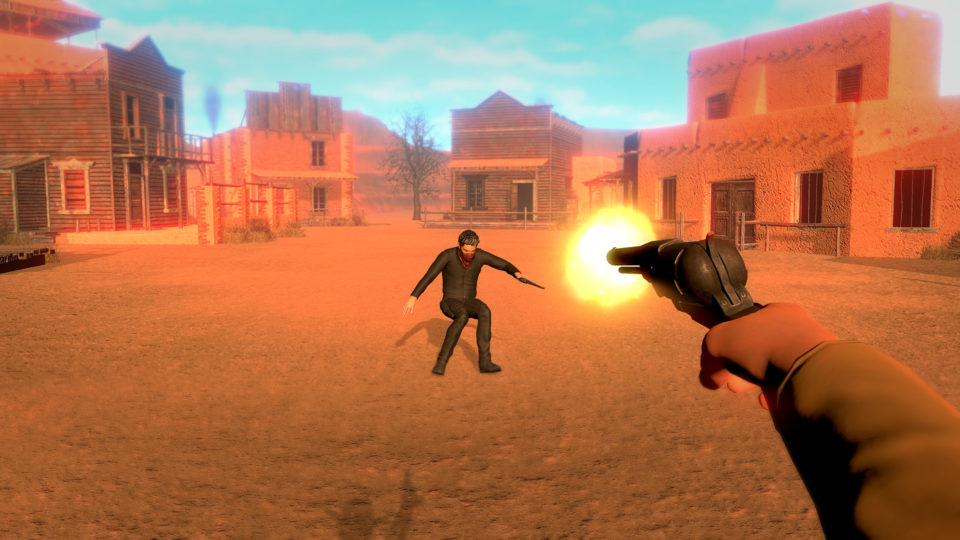
    I found any of the games involving throwing to be forgettable.  Without that real world weight attached to what I am doing, the ball physics just felt a little floaty and I don’t think it’s the games fault, but the medium.  That leaves the whack-a-dino game, which is fun.  The boxing game which is ok, the light-up game can get a little frenetic as the prompts speed up, skeeball, and the comet game is forgettable.  The 2 shooters are fun, with one having you shoot a pistol at a diaorama type setup to take out cutout ducks, flowers, rabbits and balloons and the other has you holding a pump action shotgun and taking cowboy cutouts in front of a saloon.  Both of those are fun enough for a few rounds.  My favorites by far were the shuffleboard game, which felt great in VR and bowling.

    Pew pew pew!

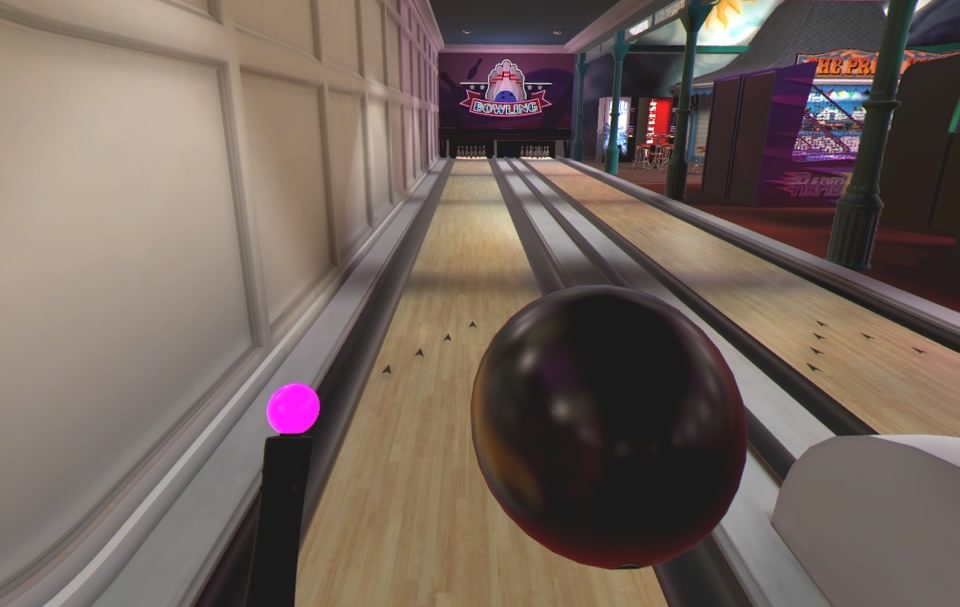
    The bowling really is the standout attraction here.  Many of us have been waiting for PSVR version of bowling and now we have one.  It’s 10 pin and only 5 rounds.  With 2 balls each round.  It works but could use some more TLC.  From what I could tell there is no way to spin the ball, so wherever you toss the ball, it heads in a very straight line to the end.  Secondly is that all the options are set in stone so if you want to play 3 balls and 10 rounds…tough luck.  That said, it still plays alright and most of the games I did note appreciate could be made better by one, glaring omission.

    Every single game here, minus the shooters is paired up, meaning that there are 2 machines at each station.  Unfortunatley, there is currently no multiplayer option as of yet, though I have heard that the dev is working on that for the PSVR version…it is available for the steam version of the game.  No matter how you feel about any of these games, playing beside a friend in a VR playroom in a competitive showdown would be a blast!  Every game also spits out tickets which can be spent on an assortment of random items at the prize booth, which you can than mess around with, though they don’t really do anything.

    Its bowling…in VR!

    All in all, this is an uninspired collection of games with a few gems.  Better for newbies to VR than veterans.  Each game keeps track of your score and places them on local, global and friend leaderboards so you can still see how you stack up with the rest of the PSVR world.  If you like mini-game collections and chasing top scores than this is probably for you, for everyone else I think you’ll have fun of probably a 1/3 of the games and for get about the rest of them.

    What would I pay? $10 seems a little more appropriate for what’s currently available.  If this had multiplayer, I’d be happy with the full asking price of $15.

    Archiact Interactive provided The VR Grid  with review code for this title and, regardless of  this review, we thank them for that!


  • Cold Iron

    Cold Iron

    Developer / Publisher – Catch & Release LLC
    Price – US $19.99 / EU €19.99  / UK £15.99 / AU $29.95
    Release date – January 30th, 2018
    Control Method – 1 x Move Controller
    Pro Patch – Yes
    Digital only – Yes
    Reviewed on – PS4 Pro

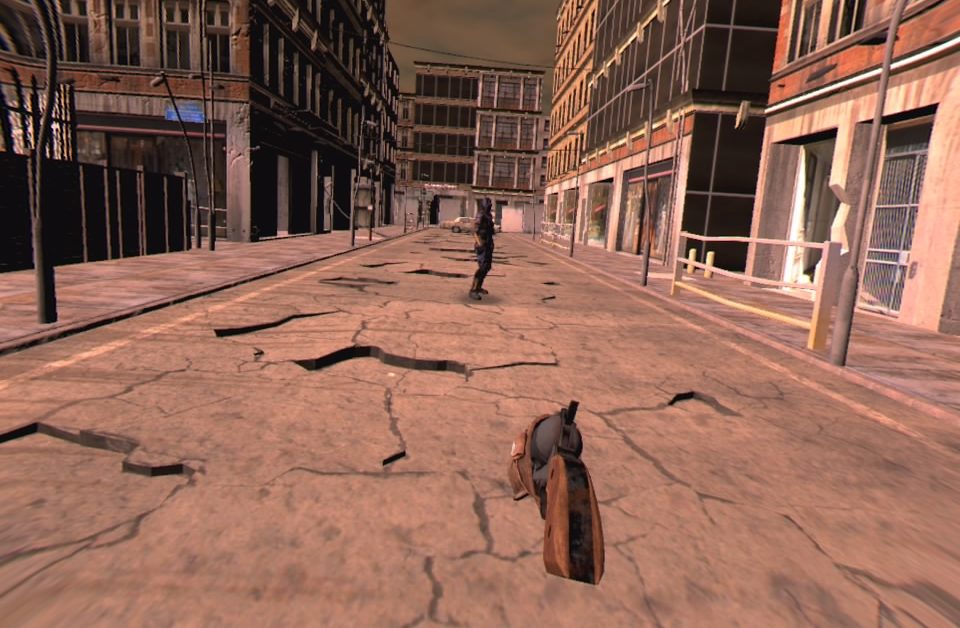
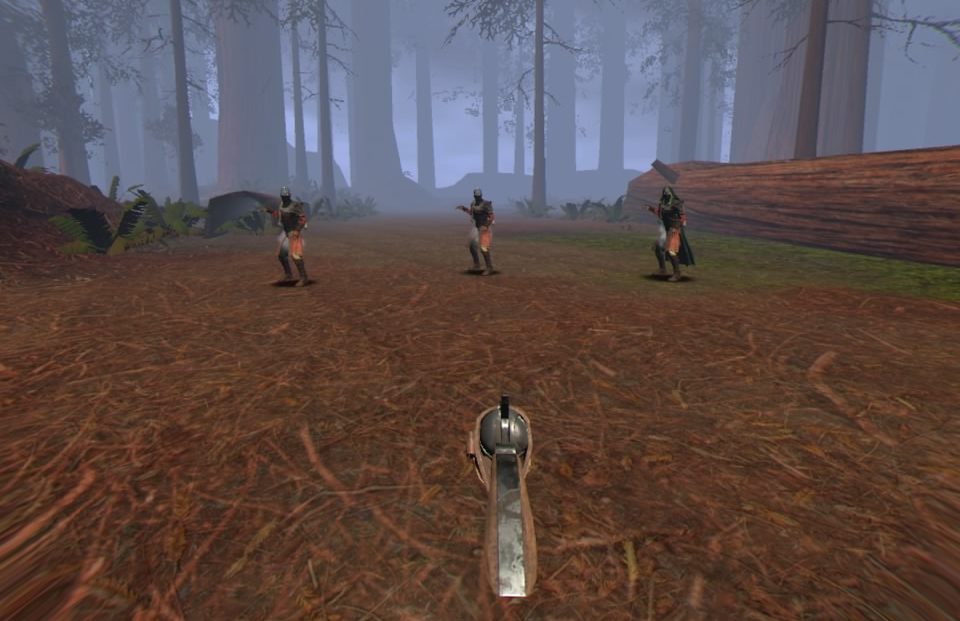
    I’m at a bit of a loss when it comes to Cold Iron. I really didn’t have any expectations going is as the teaser trailer didn’t show too much.  Self described as the “boss rush gameplay of Cuphead, the white-knuckled western aesthetic of Red Dead Redemption, the tight gunplay of Arizona Sunshine and Raw Data, and the magic and mystery of The Dark Tower”, one can’t help but get excited for what sounds like a crazy merging of genres.  Those expecting something amazing will be let down.  While each one of those comparisons may be apt in some way or another, what this boils down to is a quickdraw shooter that goes beyond the wild west.

    Cold Iron starts of like any other western shooter… with you killing someone.

    Even the trailer for this game, which I assumed showed gameplay footage, led me to think there was some kind of movement mechanic involved here, there is not.  After a brief prologue that explains your main goal, avenging your father, the game places you in setting after setting where you must be the fastest to draw your weapon against a variety of opponents.   In this regard, the game shines.  Naturally, at the games onset, the baddies you face are relatively simple but as the you progress things get a little more…insane.  Starting off in the ol’ west, I expected to face off against a bunch brigands

    until I reach the end-boss and in fact, that’s exactly what happened…in the first stage.  Each subsequent stage gets a little more surreal as you literally travel through space and time and face opponents ranging from magic wielding dryads to a futuristic sniper and so many more.  I don’t really want to spoil to many of the opponents as each new one is a treat, but for all intents and purposes, that’s the game.

    In the future is no match for your gun.

    Requiring only 1 move controller, you need to keep your gun holstered until the bell sounds signalling that it is time to shoot.  What initially seemed like an oversight in the game is that to holster you gun, Cold Iron, you need to tilt it down just enough to activate the holster so whether you shoot from the hip (not recommended) or hold the gun up to your head, as long as you tilt that gun down, it counts as being holstered.  So, before each match, you face your enemy and can mess around a bit, but once you holster your weapon, the world seemingly slows down, and you need to wait for the ring of the bell and shoot.  Soon enough enemies use this to your disadvantage by trying to distract you with whistling or using some crazy tactics (like teleportation or making clones of themselves) that ramp up the challenge.  Each enemy’s strategy has a flaw and it’s here where you must adapt or die.   Once that bell sounds, you better be quick, as some of your foes are nightmarishly fast and I found myself typically dying every time I met the next baddie as it took a few too many deaths before I figured out their strategy.  Each world has 3 enemies, and to defeat them, you must win 5 out of 10 duels.  Failure results in starting back at the beginning of the world, which frustrated initially, but once you have solved an enemy’s strategy, they only get easier to kill.  Oh, and drawing your weapon before the bell sounds results in an instant loss, so don’t do that!

    Come the 2nd world…things take a turn for the bizarre.

    I liked the variety of stages here, but as far as visual fidelity goes, Cold Iron’s smaller budget roots show.  Textures are flat, and stages feel barren with little to no activity happening around you.  This does add to the tension a bit but I still would have liked to see the environments fleshed out a bit more.  As I said the enemies before you come in a variety of shapes and sizes and look decent, though once again, nothing to write home about.  Everything here does the job, and thankfully given the simplicity of the game, that’s all that’s needed.  There are some cinematics that take place in-between each stage, but they are stark, short and to the point, just there to advance the plot and stitch each stage together.  The game is narrated by voice actor with a western drawl right out of the movies and does a great job of setting the scene and lining up your next task.

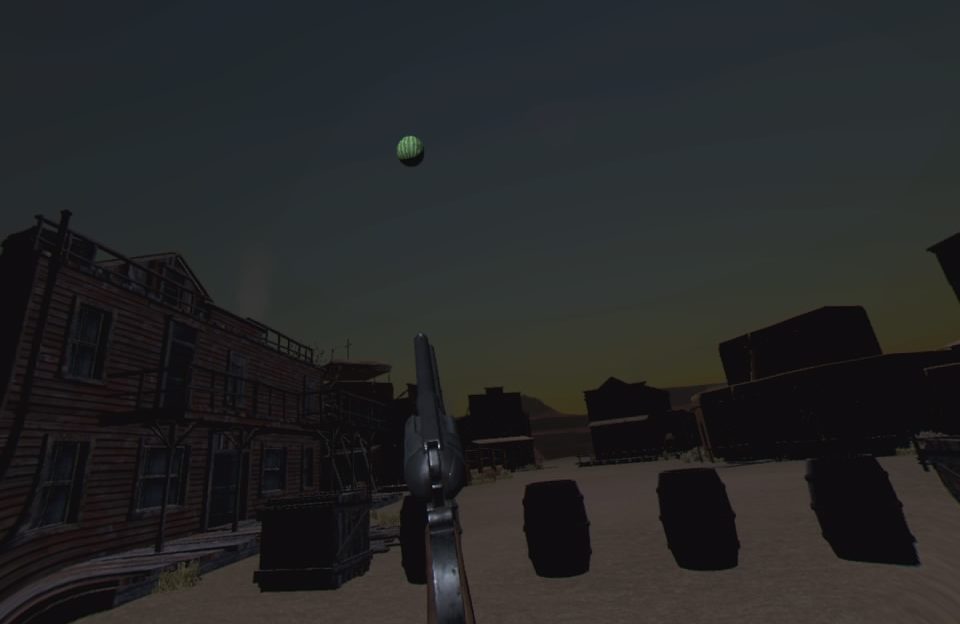
    Besides the duels and cinematics, there are bonus stages that involve shooting melons out of the sky before they hit the ground.  These cast each stage in a dusk like silhouette of sorts and each melon, when shot, lights up the sky with an explosive firework.  You can access this, and all the stages you have unlocked from the main menu/western style saloon.  The game also has a ranking system which comes down to accuracy, shots fired and draw speed, the latter of which seems to be the most important factor of the bunch.

    Its Fruit Ninja, old western style!

    I enjoyed my time in (and with) Cold Iron.  Each duel not only pushed me to my quick draw limits but forced me to exceed them on multiple occasions.  While there is most definitely some aim assist happening in the game, I still missed my fair share of shots in my efforts to be the fastest.  The focus is on speed and while I have beaten the main story, I am not fast enough to unlock to final boss, which involves meeting or exceeding the S ranked time on many of the opponents.  Even without that last boss, the conclusion to this game is both epic and satisfying and even though the narrative may be a little lacking, I was happy with the story presented.  Cold Iron is the kind of game that keeps calling you back and just asks you to try one more time.  It took me around an hour and half to get through the main campaign and in theory, if your good enough, that’s about all it would take.  I’m still trying to push my reflexes to face the final…FINAL boss and I’m not gonna lie, I keep going back for a round or 2 to do so and enjoy it every time.

    What would I pay?  I had fun in Cold Iron but given it simplistic story and gameplay as well as the relatively short play time, $20 just seems a little high when compared to other recent releases in the same price range.  $10 to $15 seems way more appropriate here, but like I said, I did have a good time.

    Catch & Release LLC  provided The VR Grid with a review code for this title and, regarldess of this review, we thank them for that!

  • The Thrill of the Fight (Early Access)

    The Thrill of the Fight (Early Access)

    Developer / Publisher – Ian Fitz
    Price – US $9.99 / EU €9.99 / UK £6.99
    Release Date – July 1st, 2016
    Input – Tracked Motion Controllers
    Play Area –  Standing, Roomscale
    Store – Steam
    Reviewed on – Oculus Rift

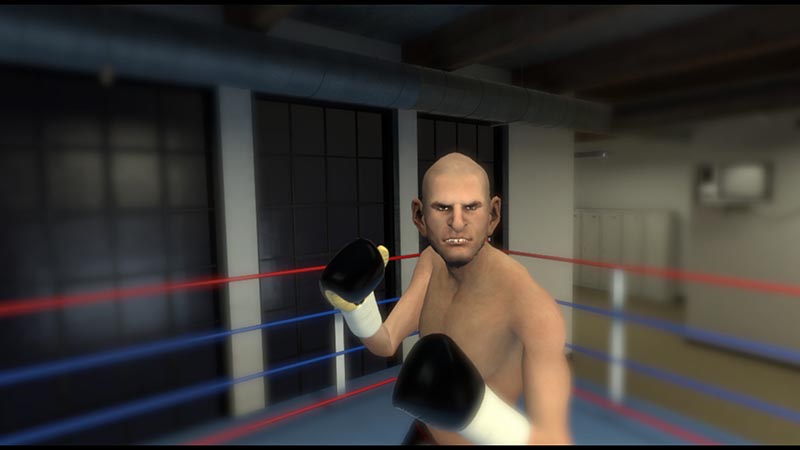
    Let me get started by saying you better do warm ups before jumping into this game.  The Thrill of the Fight (TTofT) seems like a Punch Out! clone at first, but it’s more than that.  I made the mistake of going a full 20 minutes on my first run, and the next day I was hurting in places I didn’t know existed.   This game is by no means a full-blown simulation to real boxing, but it’s hard not to get into the literal thrill of the fight when you’re punching and dodging.

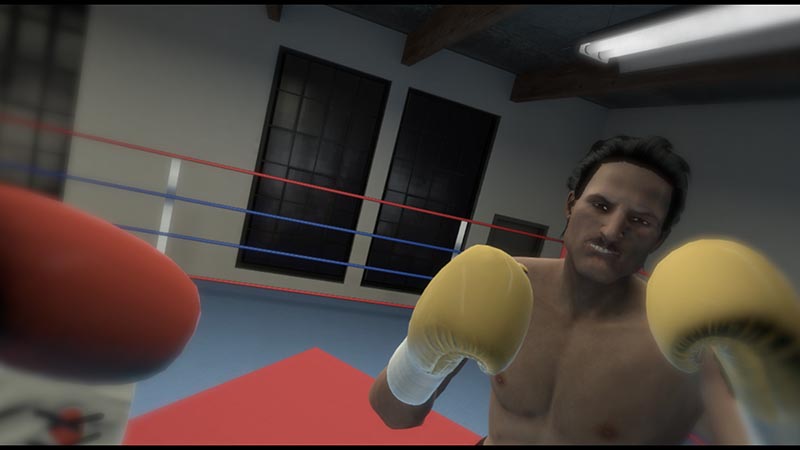
    This guys’ face is so punchable it’s ridiculous

    The game is very simple.  You face off against a handful of opponents.  You win by knocking them out or by having the most blows landed at the end of 3 rounds.  Each opponent has his own fighting style.  For example, the first one is a push over, one likes to dodge a lot, one is very tall and tries to fight you at range, etc. You can beat all the fighters within a couple days, but to me the real enjoyment came from treating this game as a workout tool.

    The graphics are very basic.  Each fighter has a unique look, but they all have the same emotionless expression and walking animation.  They will get bruises and signs of fatigue when you beat one area too much.  When you get hit consecutively your screen gets blurry, the edges get dark, and the sound muffles for a few moments.  And although it may not win any awards for graphics quality, I believe it does the job correctly without having unnecessary things get in the way in the heat of the moment.   There’s no rocking sound track and no way to easily play your own music.  The only audio is the ringing of the bell, the clamor of the audience, and the biffs of gloves hitting bodies.

    Enemies put up a decent fight on the default settings.  They will block if you punch in the same spot too often.  They will counter your punches.  They switch from being on the defense to offense if you back them into a corner.  If you want to make the game harder or easier you can adjust your hit strength in the settings, and you get a punching bag with floating numbers to show your punch strength.

    Up close, you better be on your toes!

    You will need room scale to get the most from TTofT.  You will need to circle around opponents and advance or retreat as the fight progresses.  With you constantly swinging your arms, you run a high risk of hurting yourself or breaking something, so give yourself plenty of room.

    TTofT only has a few problems.  For starters, there’s no tutorial on how to properly box.  I watched a few YouTube videos to get the basics.  After playing for a few days, I wanted more and consulted with a local trainer for a couple boxing lessons.  I incorporated them into my game and had much more fun and burned more calories.  After a month of playing every other day I have more energy and I feel like I can hold my own if I ever needed to.

    Furthermore, there’s no way to use this to train specific exercises.  You can’t choose to practice specific punches or combos or dodging, your only option is to fight the same opponents over and over.  The game won’t track your calories burned, punches thrown total time being active.  The fact that there’s only 5 different opponents means this is a strictly casual experience.

    This is a single player only game so those looking to test their mettle against a real person may be let down.   At this time the developer says he has no plans to incorporate it into the game.  This isn’t unreasonable as most VR games have a limited player base already, and this type of niche game I feel would probably have a hard time finding a match.

    The view from the canvas is much less pleasant

    However, this game is definitely fun as it stands. I recommend it to anyone wanting a workout game or to get into casual boxing.  The game is in Early Access and has a 1-man dev team.  He puts out updates monthly and is active in Steam discussions, seeking input from users.  The inevitable comparison will come between this game and a dedicated VR workout tool.  While something like BoxVR has a clear workout plan and tracks stats, it doesn’t quite capture the feeling of punching someone and throwing a hook just that little bit harder to knock him out.  Considering there have been AAA games with less support, this game deserves a play.

    What would I pay?  The game is normally $10, I think that’s spot on.  I’d pay up to $20 as this is some of the most fun you can have working out in VR.

  • I Expect You to Die

    I Expect You to Die

    Developer / Publisher – Schell Games
    Price – US $24.99 / EU €24.99  / UK £19.99 / AU $37.95
    Release date – December 13th, 2016
    Control Method – DS4, Move Controllers
    Pro Patch – No
    Digital only – Yes
    Reviewed on – PS4 Pro

    This review had been updated from the original, published December 14, 2017, to reflect the addition of the free ‘First Class’ content update from October 24th of 2017

    Have you ever want to be a super spy?  Now is your chance in IEYTD, a cleverly designed escape room style game that delivers on classic tropes from the Bond series of movies as well as establishing its unique comedic feel.  If you have ever played any stationary job sims or escape room VR games,  than you’ll be right at home here.

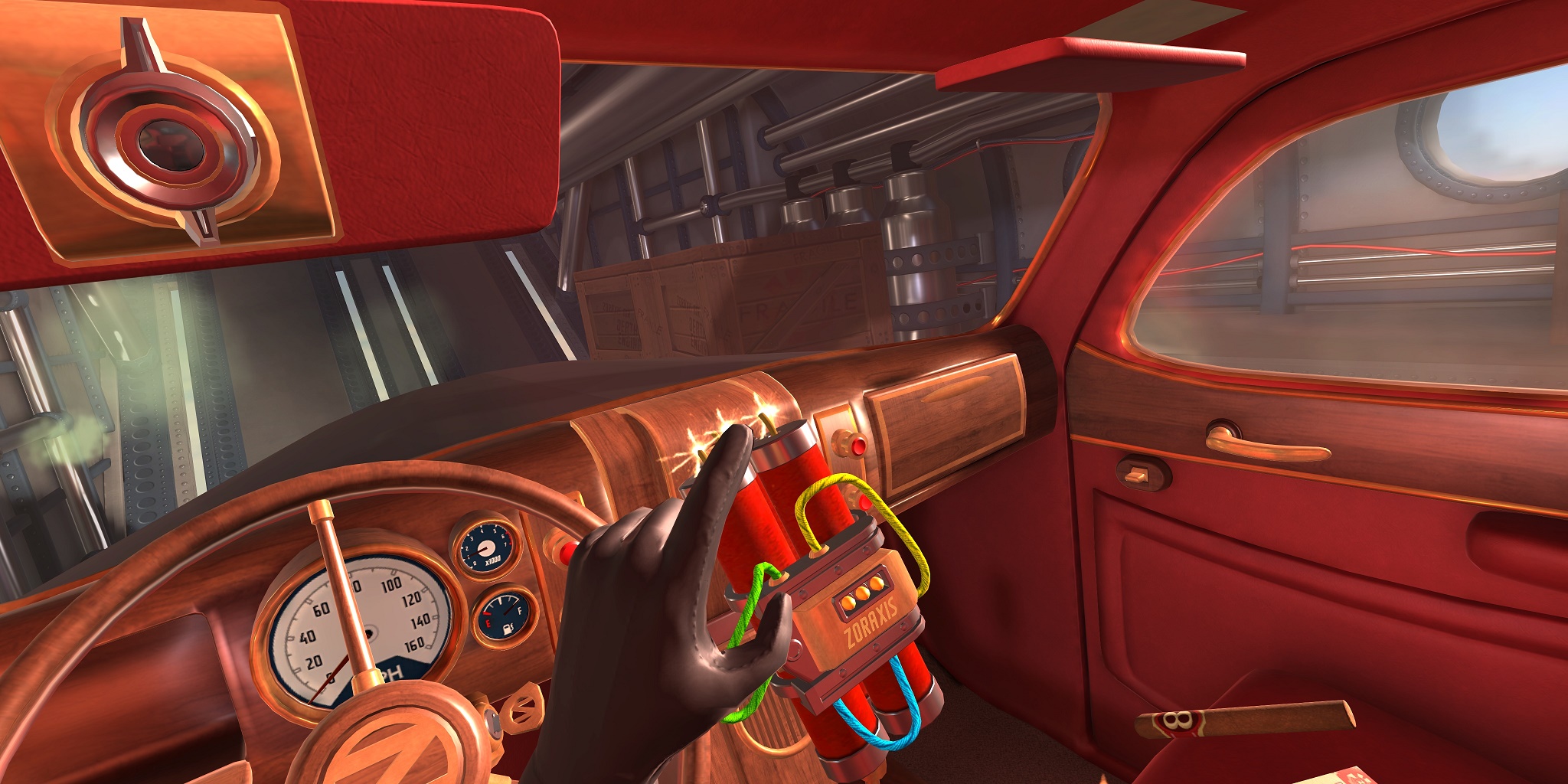
    See those sparks above that dynamite…you’re about to die.

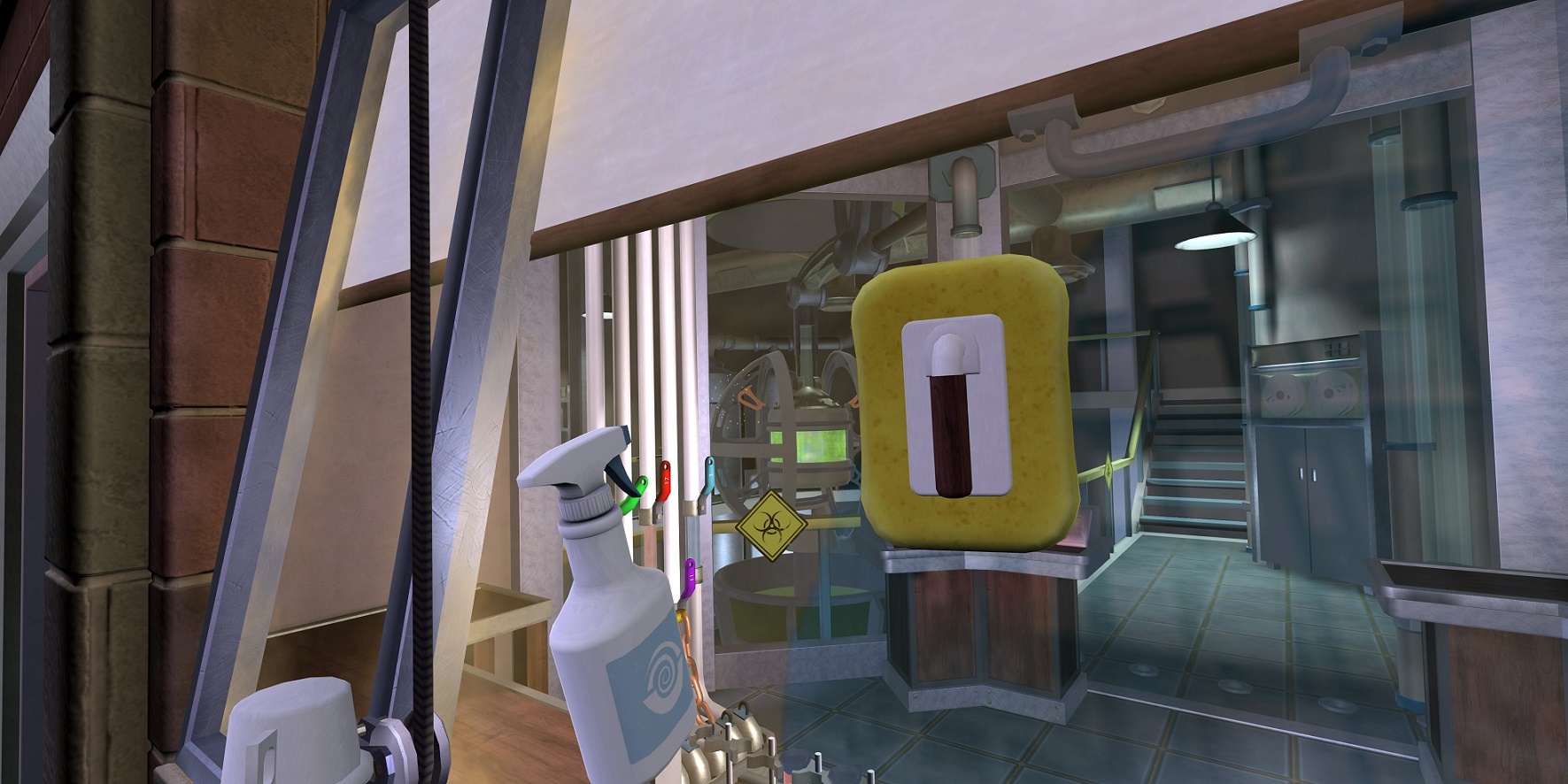
    Like many VR titles, your hands are mapped to your controllers, and while DS4 is supported, it just doesn’t feel natural with your hands locked in place. Suffice to say, Move controllers just play way better here and allow you to multitask a bit.  Either way, the core of this game involves working with the items around you to resolve the situations you have been placed in.  Some extra depth is included with some telekinetic abilities that allow you to manipulate far away objects and aids in moving everything around you.  While this ability really doesn’t make much sense as far as practicality goes,  it’s a great shortcut that allows you to pick up accidentally dropped items and interact with objects that are out of reach. The introductory level/tutorial establishes everything you need to start you adventures.  Opening containers, mixing chemicals, diffusing bombs and a host other tasks await you.  Every mistake will typically end in death whereupon you restart the current mission from the beginning.  Learning from your mistakes and keeping calm under pressure is key to progression.  The levels each have their own optional objectives  so memorizing what to do as fast as you can will get you some extra achievements.

    The opening sequence should be enough of a clue for what you are about endure as this is a series of spy missions with a comedic twist.  The missions are incredibly short, only taking you less than a few minutes to beat them…provided you knew exactly what to do.  The thing is, on your first play, you don’t know exactly what to do and that is where both the fun and frustration, in this game lie.  My advice is to figure out puzzles yourself, they will take time and you will die, a lot, but the satisfaction of solving them on your own is unrivaled.  The situations that you find yourself in have been ripped right out modern and classic spy movies and truly make you feel like you aren’t just saving yourself, but the world.   Surveying the environment and figuring out the next step in these puzzles is nightmarishly fun.

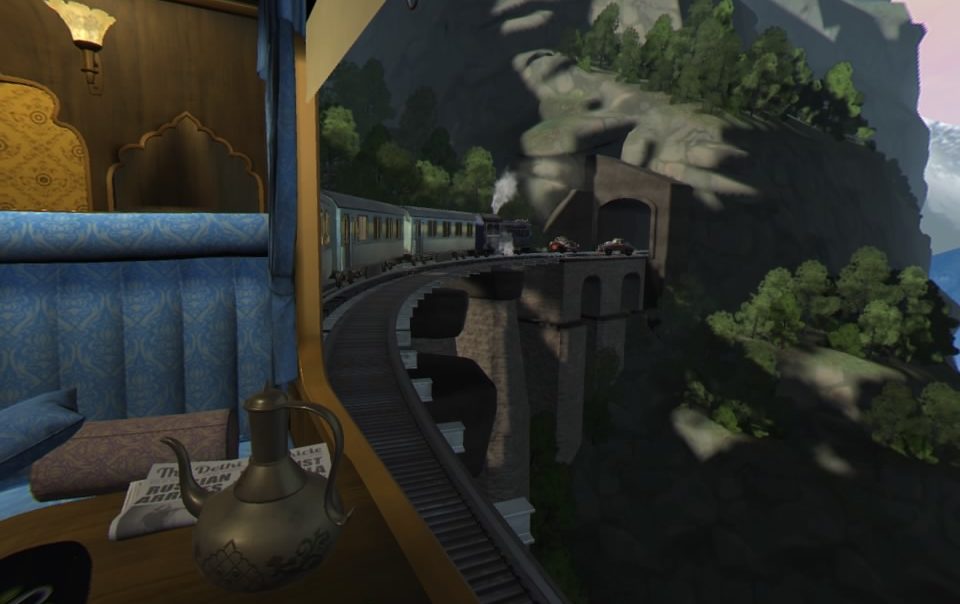
    When armored vehicles block your trains path, its usually not a good sign!

    The look of this game is super clean and polished.  Little details litter each level and the ability to manipulate most objects around really puts you in the game.  Everything is crisp with enough detail to immerse you in this super spy world.  Each level is its own “room” and looks nothing like any other stage in the game.  Whether you are in a plane, on the side of a building or riding on a train, each stage’s unique flare had me looking forward to what this game would throw at me next.  Bottom line is that IEYTD  looks great and I never encountered any kind of visual flaws or errors to complain about.  The audio as well is no slouch with a fair bit of voice work and sound effects to accompany your interactions with the world around you.  Just try banging stuff around on different surfaces and objects.  Voice over supplies most of the plot advancement in between and during levels and its full of charm and wit.   A lot of time and effort went into making this game sound amazing and it shows

    Check you out! You’re undercover

    Ultimately, this is a game of trial and error.  You are going to die so much it’ll drive you nuts, but every time you progress to that next step is motivation to keep pushing forward.  While multiple deaths can definitely be frustrating, taking a deep breath and looking at your surroundings usually leads to a solution, or just taking a small break may give you some much needed clarity. The level restarts upon death which isn’t too bad as, once you figure out what to do in a level, progressing back to where you died takes less time with each retry.  I Expect You to Die now has 5 stages to play around in and each is better than the last.  This is great VR fun with a tonne of comedy, intuitive puzzles and classic espionage tropes that are sure to elicit the James Bond fanboy in many of us!

    What would I pay? $25 is a perfect price. The 5 stages should provide you with a few hours of fun on your first try and multiple solutions to many of the problems provide some decent replayabilty.  This is great stuff!